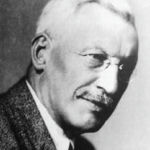
Alfred Cardew Dixon
English mathematician
Alfred Cardew Dixon's AcademicInfluence.com Rankings

Download Badge
Mathematics
Why Is Alfred Cardew Dixon Influential?
(Suggest an Edit or Addition)According to Wikipedia, Sir Alfred Cardew Dixon, 1st Baronet Warford FRS was an English mathematician. Biography Dixon was born on 22 May 1865 in Northallerton, Yorkshire, England. He studied at the University of London and graduated with an MA. He entered Trinity College, Cambridge, in 1883 and graduated as Senior Wrangler in the Mathematical Tripos in 1886. In 1888, Dixon was awarded the second Smith's Prize, and also appointed a Fellow of Trinity College, Cambridge. He took the degree of Sc.D. at Cambridge University in 1897. He was Professor of Mathematics at Queen's College, Galway, from 1893 to 1901. In 1901 he was appointed to the chair at Queen's University Belfast, which he held till 1930, receiving the title of Emeritus Professor on retirement.
Alfred Cardew Dixon's Published Works
Published Works
- The Twenty-Seven Lines upon the Cubic Surface (1912) (69)
- Summation of a certain Series (1902) (24)
- The elementary properties of the elliptic functions, with examples (14)
- The Problem of the Rectangular Plate (1934) (11)
- The Second Mean Value Theorem in the Integral Calculus (1929) (11)
- The Theory of a Thin Elastic Plate, Bounded by Two Circular Arcs and Clamped (10)
- On the Reduction of the Ternary Quintic and Septimic to Their Canonical Forms (10)
- On a Certain Double Integral (9)
- The Canonical Forms of the Ternary Sextic and Quaternary Quartic (7)
- On the Solving Nuclei of Certain Integral Equations whose Nuclei are Homogeneous and of Degree —1, and the Solution of a Class of Linear Functional Equations (7)
- Harmonic Expansions of Functions of Two Variables (5)
- On “Well-Ordered” Aggregates (5)
- On the Series of Sturm and Liouville, as Derived from a Pair of Fundamental Integral Equations Instead of a Differential Equation (5)
- The Functions Involved in the Theory of a Thin Elastic Rectangular Plate, Clamped at the Edges, and Certain Integral Equations Satisfied by Such Functions (5)
- XI. On the singular solutions of simultaneous ordinary differential equations and the theory of congruencies (3)
- On Simultaneous Partial Differential Equations (3)
- On Many-Valued Newtonian Potentials (2)
- Some Limiting Cases in the Theory of Integral Equations (2)
- Expansions and Functions Reduced to Zero by the Operator sinh D—cD (2)
- On Burmann's Theorem (1901) (2)
- Expansions by means of Lamé's Functions (1902) (2)
- The Conic through Five Given Points (1908) (1)
- On a Question in the Theory of Aggregates (1)
- On a Class of Expansions in Oscillating Functions (1)
- Proof that every rational algebraic equation has a root (1907) (1)
- Records of Proceedings at Meetings (1933) (1)
- Records of Proceedings at Meetings. Session November, 1931—June, 1932 (1932) (1)
- On the Relation Between Pfaff's Problem and the Calculus of Variations (1)
- On Plane Cubics (1901) (1)
- 367. Proof That 0 ∞ sinx x dx = π 2 (1)
- Notes on the Theory of Automorphic Functions (1899) (0)
- 226. [L1. 2. b.] Morley’s Problem (1907) (0)
- The Specification of a Map (1933) (0)
- Notes on the Theory of Automorphic Functions (continued) (0)
- On Systems of Three Quaternary Quadrics that can be Expressed by Means of Five Squares (0)
- 59. On the Circular Measure of Angles (1898) (0)
- On Ampère's Equation Rr+2Ss+Tt+U(rt−s2)=V (1899) (0)
- 369. Note on 1 m +2 m +3 m + +n m (1912) (0)
- Records of Proceedings at Meetings: Session November, 1931—June, 1932: Annual General Meeting (1932) (0)
- 367. [E. 5.] Proof that (1912) (0)
- 310. [X. 4. b. a.] Squared paper solution of the equation a cos ϕ + b sin ϕ = c (1910) (0)
- An Introduction to the Theory of Multiple Periodic Functions (1908) (0)
- Prime Functions on a Riemann Surface (1900) (0)
- The Reduction of Substitution to its Canonical Form (1899) (0)
- A Formula in the Theory of Single Theta-Functions (0)
- The theory of a thin isotropic rectangular plate clamped at the edges (0)
- The Construction of Solving Nuclei for Certain Systems of Integral Equations (0)
- 346. [V. a.] Squared Paper Solution of the Equation α cos θ+b sin θ=c (1911) (0)
- 358. [A. 3. d.] Note on Sturm's theorem in the theory of equations (1911) (0)
- 106. [C. 1. a.] On the Permutability of Independent Differentiations (1902) (0)
- 412. [K1.2 . b, c.] Proof of Feuerbach’s theorem (1914) (0)
- 271.[K. 2. c ] The polar circle of a triangle is cut orthogonally by the director circle of any inscribed conic (1908) (0)
- 103. [D. 6. b.] Note on the Logarithmic Series (1901) (0)
- On the Solving Nuclei of Integral Equations whose Nuclei are Homogeneous and of Degree –1 (1934) (0)
- The Polygons of Poncelet and Weill’s Theorem (1897) (0)
- On the Cases of Exception in Jacobi's Theorem Concerning Double Residues (0)
- On the Integration of Systems of Total Differential Equations (1899) (0)
- 60. Note on the formula (1898) (0)
- Approximation by means of Convergent Fractions (1910) (0)
- Geometry in Flatland (1903) (0)
- The Twisted Cubic, Etc. (1914) (0)
- 48. On the expression of sin θ as an infinite product (1897) (0)
- The Solution of Integral Equations (0)
This paper list is powered by the following services:

Other Resources About Alfred Cardew Dixon
What Schools Are Affiliated With Alfred Cardew Dixon?
Alfred Cardew Dixon is affiliated with the following schools:
