Boris Rosing
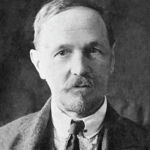
Russian television pioneer
Boris Rosing's AcademicInfluence.com Rankings

Download Badge
Engineering
Why Is Boris Rosing Influential?
(Suggest an Edit or Addition)According to Wikipedia, Boris Lvovich Rosing was a Russian scientist and inventor of television. Biography Boris Rosing was born in Saint Petersburg into the family of a government official. His father, Lev Nikolaevich Rozing, served on the commission for military service under Czar Alexander II. Rozing was a descendant of the noble Rozing family, founded by Dutch immigrant Peter Rozing. Lev developed an interest mathematics and technology, including recent inventions, which he communicated to his son. From 1879 to 1887, Boris studied at St. Petersburg's Vvdensky gymnasium, from which he graduated with a gold medal. There, he distinguished himself in his studies of the exact sciences, literature and music. He then studied physics and mathematics at St. Petersburg University, which was a major research center. The distinguished faculty included the chemist Dmitri Mendeleev and the mathematicians Pafnuty Chebyshev and Andrey Markov. After graduating with honors in 1891, he remained at the university to pursue graduate studies in physics. The subject of his dissertation was magnetic hysteresis. He discovered hysteresis in the lengths of iron wires in the presence of cyclic magnetic fields, a phenomenon that was discovered independently by the Japanese investigator Hantaro Nagaoka. He subsequently became a physics instructor at the St. Petersburg Institute of Technology. Starting in 1894, he also taught physics at the Konstantinovsky Artillery School, and from 1906, he lectured on electrical and magnetic measurements as part of women's polytechnic courses. During 1894–1900, he continued his studies of magnetism but also worked on several practical electrical problems. He taught at the St. Petersburg Institute of Technology until 1918. He then conducted research at the Leningrad Experimental Electrotechnical Laboratory from 1924 to 1928 and at the Central Laboratory for Wire Communications from 1928 to 1931.
