Frederick William Andrewes
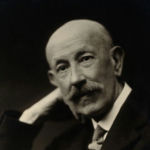
British pathologist and bacteriologist
Frederick William Andrewes's AcademicInfluence.com Rankings

Download Badge
Biology
Why Is Frederick William Andrewes Influential?
(Suggest an Edit or Addition)According to Wikipedia, Sir Frederick William Andrewes was an English physician, pathologist, and bacteriologist. Biography After education at Oakley House School in Reading, Frederick Andrewes matriculated on 11 October 1878 at Christ Church, Oxford, where he graduated in 1882 BA with first-class honours in natural sciences. He obtained in 1883 the Burdett Coutts University Scholarship in Geology. Having won an Open Entrance Scholarship, he began in 1885 his clinical training at St Bartholomew's Hospital Medical College, where he learned bacteriology from Emanuel Edward Klein and pathology from Alfred Antunes Kanthack. In 1887 Andrewes graduated there BM and qualified MRCS. At St Bartholomew's Hospital he was house physician to James Andrew and completed his medical education by a brief course of study in Vienna. Upon his return from Vienna Andrewes was appointed casualty physician at St Bartholomew's Hospital and later tutor in practical medicine. He was also assistant physician and pathologist to the Royal Free Hospital. He qualified MRCP in 1889. In 1891 he graduated DPH . In the 1890s he graduated MD . In 1894 he was appointed assistant demonstrator of practical medicine as successor to Archibald Garrod. In 1897 the joint appointments of pathologist and lecturer on pathology at St Bartholomew's Hospital became vacant when Kanthack was appointed to the chair of pathology at the University of Cambridge. Andrewes succeeded him in these posts and continued in office for thirty years. In 1912 Andrewes's lectureship in pathology was raised by the University of London to a professorship.
Frederick William Andrewes's Published Works
Published Works
- THE STUDY OF THE STREPTOCOCCI PATHOGENIC IN MAN. (1906) (225)
- A SYSTEM OF BACTERIOLOGY TO RELATION TO MEDICINE (1931) (140)
- Studies in group-agglutination I. The salmonella group and its antigenic structure† (134)
- DYSENTERY BACILLI:: THE DIFFERENTIATION OF THE TRUE DYSENTERY BACILLI FROM ALLIED SPECIES (1918) (37)
- Diphtheria, Its Bacteriology, Pathology and Immunology (1924) (30)
- A CASE OF ACUTE MENINGOCOCCAL SEPTICÆMIA. (1906) (21)
- A Study of the Serological Races of the Flexner Group of Dysentery Bacilli. (21)
- Studies in group agglutination. II.—The absorption of agglutinin in the diphasic salmonellas (1925) (15)
- The Croonian Lectures ON THE BEHAVIOUR OF THE LEUCOCYTES IN INFECTION AND IMMUNITY. (1910) (13)
- ON AN OUTBREAK OF DIARRHŒA IN THE WARDS OF ST. BARTHOLOMEW'S HOSPITAL,: PROBABLY CAUSED BY INFECTION OF RICE-PUDDING WITH BACILLUS ENTERITIDIS SPOROGENES (1899) (8)
- ON THE INTRATHECAL ROUTE FOR THE ADMINISTRATION OF TETANUS ANTITOXIN. (1917) (8)
- Note on the fermentation of starch by certain hæmolytic streptococci (8)
- A Consideration OF RECENT SEROLOGICAL WORK ON THE MENINGOCOCCUS. (1917) (7)
- The Nature and Systematic Position of B. paratyphosus C (1921) (6)
- The Haemolytie Streptococci: their Grouping by Agglutination. (1932) (5)
- A CASE OF CUTANEOUS ANTHRAX SUCCESSFULLY TREATED BY SCLAVO'S SERUM (1905) (4)
- THE BACTERIOLOGY OF THE ALIMENTARY CANAL (1913) (2)
- Harveian Oration ON THE BIRTH AND GROWTH OF SCIENCE IN MEDICINE (1920) (2)
- The cytology and bacteriology of condensed milks (2)
- THE BACTERIOLOGY OF THE ALIMENTARY CANAL. (1)
- A SECOND CASE OF CUTANEOUS ANTHRAX SUCCESSFULLY TREATED BY SCLAVO'S SERUM WITHOUT EXCISION. (1905) (1)
- THE WORK OF BRITISH PATHOLOGY IN RELATION TO THE WAR (1917) (1)
- Notes on the Bacteriological Examination of Eleven Cases of Cerebrospinal Fever Treated in St. Bartholomew's Hospital during the First Three Months of the Year 1916 (1916) (1)
- Surgical Pathology and Morbid Anatomy (1887) (1)
- THE FUTURE OF THE LISTER INSTITUTE (1914) (0)
- SOME FIGURES AS REGARDS SUSCEPTIBILITY TO REVACCINATION. (0)
- Report on the Sections Submitted from the Two Cases (Nos. 11 and 42). (0)
- Medical Opinion and Movement (1907) (0)
- Muscle Contracture following Injury (1918) (0)
- A METHOD OF STERILISING SPONGES. (1905) (0)
- Observations on the Accuracy of Different Methods of Measuring small Volumes of Fluid. (1919) (0)
- Discussion on the Serum Treatment of Scarlet Fever (1927) (0)
- Investigations on the micro-organisms of sewage (1894) (0)
- A SECOND CASE OF CUTANEOUS ANTHRAX SUCCESSFULLY TREATED BY SCLAVO'S SERUM WITHOUT EXCISION (1905) (0)
- Conjoint Meeting of the Sections of Surgery and Neurology, with the War Office Committee for the Study of Tetanus: February 14, 1918: MUSCLE CONTRACTURE FOLLOWING INJURY (0)
- Birth and Growth of Science in Medicine (0)
- The teaching of preventive medicine. (1919) (0)
- The Pathological Department of a Modern Hospital (1904) (0)
- March 10, 1913: A Discussion on Alimentary Toxæmia; Its Sources, Consequences, and Treatment: The Bacteriology of the Alimentary Canal (1913) (0)
- A Discussion on Alimentary Toxæmia; Its Sources, Consequences, and Treatment (1913) (0)
- The application of bacteriological studies to the prevention of diphtheria (1921) (0)
- THE MODE OF EXPRESSING THE DIFFERENTIAL LEUCOCYTE COUNT. (1928) (0)
- Hæmolytic Streptococci (1932) (0)
- The birth and growth of science in medicine : being the Harveian oration delivered before the Royal College of Physicians of London, October 18th, 1920 / Sir Frederick W. Andrewes. (0)
This paper list is powered by the following services:

Other Resources About Frederick William Andrewes
What Schools Are Affiliated With Frederick William Andrewes?
Frederick William Andrewes is affiliated with the following schools:
