Harry Seeley
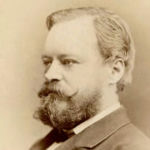
British paleontologist
Harry Seeley's AcademicInfluence.com Rankings

Download Badge
Biology
Why Is Harry Seeley Influential?
(Suggest an Edit or Addition)According to Wikipedia, Harry Govier Seeley was a British paleontologist. Early life Seeley was born in London on 18 February 1839, the second son of Richard Hovill Seeley, a goldsmith, and his second wife Mary Govier. When his father was declared bankrupt, Seeley was sent to live with a family of piano makers. Between the ages of eleven and fourteen, he went to a day school and then spent the next two years learning to make pianos. He also attended lectures at the Royal School of Mines by Thomas Henry Huxley, Edward Forbes, and other notable scientists. In 1855, with the support of his uncle, Seeley began to study law but shortly gave it up to pursue a career as an actuary. In the late 1850s, he studied English and mathematics at the Working Men's College and served as a secretary for the college's museum. He also worked in the library of the British Museum, where Samuel Pickworth Woodward encouraged him to study geology.
Harry Seeley's Published Works
Published Works
- I. On the classification of the fossil animals commonly named Dinosauria (611)
- On the Dinosauria (1879) (339)
- Classification of the Dinosauria (1888) (212)
- Note on some of the Generic Modifications of the Plesiosaurian Pectoral Arch (1874) (85)
- Researches on the Structure, Organisation, and Classification of the Fossil Reptilia. Part IX., Section 1. On the Therosuchia (71)
- The Reptile Fauna of the Gosau Formation preserved in the Geological Museum of the University of Vienna (1881) (61)
- On the Pectoral Arch and Fore Limb of Ophthalmosaurus, a new Ichthyosaurian Genus from the Oxford Clay (1874) (53)
- Researches on the Structure, Organization, and Classification of the Fossil Reptilia. Part IX., Section 3. On Diademodon (46)
- On Murænosaurus Leedsii, a Plesiosaurian from the Oxford Clay. Part I (1874) (41)
- Researches on the Structure, Organization, and Classification of the Fossil Reptilia. VI. On the Anomodont Reptilia and Their Allies (40)
- XXXI.—OnOrnithopsis,a gigantic animal of the Pterodactyle kind from the Wealden (1870) (35)
- Researches on the Structure, Organization, and Classification of the Fossil Reptilia. Part IX., Section 5. On the Skeleton in New Cynodontia from the Karroo Rocks (34)
- Researches on the Structure, Organization, and Classification of the Fossil Reptilia. VII. Further Observations on Pareiasaurus (32)
- Researches on the Structure, Organization, and Classification of the Fossil Reptilia. Part IX., Section 4. On the Gomphodontia (32)
- On the Dinosaurs from the Maastricht Beds (1883) (27)
- The nature of the shoulder girdle and clavicular arch in sauropterygia (26)
- On Remains of a small Lizard from the Neocomian Rocks of Comén, near Trieste preserved in the Geological Museum of the University of Vienna (1881) (25)
- On the British Fossil Cretaceous Birds (1876) (25)
- On Thecospondylus Daviesi (Seeley), with some Remarks on the Classification of the Dinosauria (1888) (23)
- XXVII.—On Ammonites from the Cambridge Greensand (1865) (20)
- XLVI.—On the shoulder-girdle in Cretaceous Ornithosauria (1891) (20)
- III.—Additional evidence of the structure of the head in Ornithosaurs from the Cambridge Upper Greensand; being a supplement to ‘The Ornithosauria’ (19)
- On a New Reptile from Welte Vreden (Beaufort West), Eunotosaurus africanus (Seeley) (1892) (19)
- On Macrurosaurus semnus (Seeley), a Long tailed Animal with Procœlous Vertebræ from the Cambridge Upper Greensand, preserved in the Woodwardian Museum of the University of Cambridge (1876) (18)
- On a Sacrum, apparently indicating a new type of Bird, Ornithodesmus cluniculus, Seeley, from the Wealden of Brook (1887) (18)
- Researches on the Structure, Organization, and Classification of the Fossil Reptilia. I. On Protorosaurus Speneri (von Meyer) (18)
- On Neusticosaurus pusillus (Fraas), an Amphibious Reptile having Affinities with the Terrestrial Nothosauria and with the Marine Plesiosauria (1882) (17)
- XI. Researches on the structure, organisation, and classification of the fossil reptilia. VI. On the anomodont reptilia and their allies (17)
- Croonian Lecture: Researches on the Structure, Organization, and Classification of the Fossil Reptilia. II. On Pareiasaurus bombidesn (Owen), and the Significance of Its Affinities to Amphibians, Reptiles, and Mammals (15)
- The Surface of the Earth (1889) (15)
- On an Ornithosaurian (Doratorhynchus validus) from the Purbeck Limestone of Langton near Swanage (1875) (15)
- On Pareiasaurus bombidens Owen and the significance of its affinities to amphibians, reptiles, and mammals (15)
- On the Dinosauria of the Cambridge Greensand (1879) (14)
- On Mauisaurus Gardneri (Seeley), an Elasmosaurian from the Base of the Gault at Folkestone (1877) (14)
- On Agrosaurus Macgillivrayi (Seeley), a Saurischian Reptile from the N.E. Coast of Australia (1891) (14)
- The Mesosauria of South Africa (1892) (13)
- Note on Psephophorus polygonus, v. Meyer, a new Type of Chelonian Reptile allied to the Leathery Turtle (1880) (13)
- XLII.—Footprints of small Fossil Reptiles from the Karroo Rocks of Cape Colony (1904) (13)
- On the Base of a large Lacertian Cranium from the Potton Sands, presumably Dinosaurian (1874) (12)
- Note on the Cranial Characters of a large Teleosaur from the Whitby Lias preserved in the Woodwardian Museum of the University of Cambridge, indicating a new Species, Teleosaurus eucephalus (1880) (12)
- III.—On Oudenodon (Aulacocephalus) pithecops from the Dicynodon Beds of East London, Cape Colony (1898) (11)
- XII. Further observations on the shoulder girdle and clavicular arch in the Ichthyosauria and Sauropterygia (11)
- Notice of the Occurrence of Remains of a British Fossil Zeuglodon (Z. Wanklyni, Seeley) in the Barton Clay of the Hampshire Coast (1876) (11)
- X.—Remarks on Prof. Owen's monograph on Dimorphodon (1870) (11)
- Note on Pelobatochelys Blakii and other Vertebrate Fossils exhibited by the Rev. J. F. Blake in illustration of his paper on the Kimmeridge Clay (1875) (10)
- Researches on the structure, organization, and classification of the fossil reptilia.—Part IX. section 1. On the Therosuchia (1894) (9)
- On Evidence of two Ornithosaurians referable to the Genus Ornithocheirus, from the Upper Greensand of Cambridge, preserved in the Collection of W. Reed, Esq., F.G.S. (1881) (9)
- On the Maxillary Bone of a new Dinosaur (Priodontognathus Phillipsii), contained in the Woodwardian Museum of the University of Cambridge (1875) (9)
- On Rhamphocephalus Prestwichi, Seeley, an Ornithosaurian from the Stonesfield Slate of Kineton (1880) (9)
- On Aristosuchus pusillus (Owen), being Further Notes on the Fossils described by Sir R. Owen as Poikilopleuron pusillus, Owen (1887) (9)
- XX.—Notice of Torynocrinus and other new and little-known fossils from the Upper Greensand of Hunstanton, commonly called the Hunstanton Red Rock (1866) (8)
- On the Skull of an Ichthyosaurus from the Lias of Whitby, apparently indicating a new Species (I. Zetlandicus, Seeley), preserved in the Woodwardian Museum of the University of Cambridge (1880) (8)
- On the Posterior Portion of a Lower Jaw of Labyrinthodon (L. Lavisi), from the Trias of Sidmouth (1876) (8)
- On the Hunstanton Red Rock (1864) (8)
- LXVIII.—On the extremity of the tail in Ichthyosauria (1908) (8)
- On an associated Series of Cervical and Dorsal Vertebræ of Polyptychodon, from the Cambridge Upper Greensand, in the Woodwardian Museum of the University of Cambridge (1876) (7)
- On Cervical and Dorsal Vertebræ of Crocodilus cantabrigiensis (Seeley) from the Cambridge Upper Greensand (1874) (7)
- On Heterosuchus valdensis, Seeley, a Procœlian Crocodile from the Hastings Sand of Hastings (1887) (7)
- XII.—On the type of the genus Massospondylus, and on some Vertebrœ and limb-bones of M.(?) Browni (7)
- On Thecospondylus Horneri, a new Dinosaur from the Hastings Sand, indicated by the Sacrum and the Neural Canal of the Sacral Region (1882) (6)
- IX.—On Plesiosaurus macropterus, a new species from the lias of Whitby (6)
- Resemblance between the Bones of Typical living Reptiles and the Bones of other animals. (1874) (6)
- Note on the Pelvis of Ornithopsis (1889) (6)
- The fresh-water fishes of Europe : a history of their genera, species, structure, habits, and distribution / by H. G. Seeley. (6)
- IV. On the nature and limits of reptilian character in mammalian teeth (6)
- XLI.—On Euskelesaurus Brownii (Huxley) (1894) (6)
- On Cetarthrosaurus Walkeri (Seeley), an Ichthyosaurian from the Cambridge Upper Greensand (1873) (6)
- II.—On the Dentition of the Palate in the South African Fossil Reptile Genus Cynognathus (1908) (6)
- XXVII.—On the skull of mochlorhinus platyceps, from Bethulie, orange free state, preserved in the Albany Museum, Grahamstown (1898) (6)
- On the Dorsal Region of the Vertebral Column of a new Dinosaur (indicating a new Genus, Sphenospondylus), from the Wealden of Brook in the Isle of Wight, preserved in the Woodwardian Museum of the University of Cambridge (1883) (5)
- Discovery of Dakosaurus in England (1869) (5)
- XVII.—On Thecodontosaurus and Palæosaurus (1895) (5)
- I.—On large Terrestrial Saurians from the Rhætio Beds of Wedmork Hill, described as Avalonia Sanfordi and Picrodon Herveyi (1898) (5)
- On the Os Pubis of Polacanthus Foxii (1892) (5)
- II.—On Bubalus Bainii (Seeley) (1891) (5)
- VI.—The Rock of the Cambridge Greensand (1866) (5)
- Researches on the Structure, Organization, and Classification of the Fossil Reptilia. VIII. Further Evidences of the Skeleton in Deuterosaurus and Rhopalodon, from the Permian Rocks of Russia (5)
- On the Femur of Cryptosaurus eumerus, Seeley, a Dinosaur from the Oxford Clay of Great Grandshen (1875) (4)
- On Remains of Emys hordwellensis (Seeley) from the Lower Hordwell Beds in the Hordwell Cliff, contained in the Woodwardian Museum of the University of Cambridge (1876) (4)
- I.—Evidences of a Mandible of a New Labyrinthodont from the Upper Karroo Beds of Cape Colony (Ptychosphenodon Browni) (1907) (4)
- IV.—Professor Carl Vogt on the Archæopteryx (1881) (4)
- On the Axis of a Dinosaur from the Wealden of Brook in the Isle of Wight, probably referable to the Iguanodon (1875) (4)
- On Saurodesmus Robertsoni (Seeley), a Crocodilian Reptile from the Rhætic of Linksfield, in Elgin (1891) (4)
- Note on a Femur and a Humerus of a small Mammal from the Stonesfield Slate (1879) (4)
- On Patricosaurus merocratus, Seeley, a Lizard from the Cambridge Greensand, preserved in the Woodwardian Museum of the University of Cambridge (1887) (4)
- On the Organization of the Ornithosauria. (1876) (4)
- XXXVII.—On Acanthopholis platypus (Seeley), a Pachypod from the Cambridge Upper Greensand (1871) (4)
- XLV.—On the dentition of the diastema in some fossil reptiles referred to the Gomphodontia, from the upper Karroo rocks of Cape Colony (1908) (3)
- I.—A large Labyrinthodont Tooth from the Upper Karroo Beds of Wonderboom, near Burghersdorp (1908) (3)
- I. On a Section Discovering the Cretaceous Beds at Ely (1865) (3)
- On new Species of Procolophon from the Cape Colony preserved in Dr. Grierson's Museum, Thornhill, Dumfriesshire; with some Remarks on the Affinities of the Genus (1878) (3)
- XXIX.—Note on some Chelonian remains from the London Clay (1871) (3)
- XLIII.—On a new Type of Reptilian Tooth (Ptychocynodon) from the Upper Karroo Beds near Burghersdorp, Cape Colony (1904) (3)
- Note on the Caudal Vertebra of a Cetacean discovered by Prof. Judd in the Brockenhurst beds, indicative of a new Type allied to Balænoptera (Balænoptera Juddi) (1881) (3)
- XIII. Researches on the structure, organisation, and classification of the fossil reptilia. Part VIII. On further evidences of Deuterosaurs and Rhopalodon from the permian rocks of Russia (3)
- LIII.—On Hortalotarsus skirtopodus, a new Saurischian fossil from Barkly East, Cape Colony (1894) (2)
- On Evidence of a Bird from the Wealden Beds of Ansty Lane, near Cuckfield (1899) (2)
- On the Skeleton of a Theriodont Reptile from the Baviaans River (Cape Colony): Dicranozygoma leptoscelus, gen. et sp. nov. (1900) (2)
- On further evidences of Deuterosaurus and Rhopalodon from the Permian Rocks of Russia (1893) (2)
- A Sketch of the Gravels and Drift of the Fenland (1866) (2)
- II.—M. Dollo's Notes on the Dinosaurian Fauna of Bernissart. (1887) (2)
- III. Researches on the structure, organisation, and classification of the fossil reptilia. VII. Further observations on Pareiasaurus (2)
- On Delphinognathus conocephalus (Seeley) from the Middle Karoo Beds, Cape Colony, preserved in the South African Museum, Capetown (1892) (2)
- On the Vertebral Column and Pelvic Bones of Pliosaurus Evansi (Seeley), from the Oxford Clay of St. Neotts, in the Woodwardian Museum of the University of Cambridge (1877) (2)
- On a remarkable Dinosaurian Coracoid from the Wealden of Brook in the Isle of Wight, preserved in the Woodwardian Museum of the University of Cambridge, probably referable to Ornithopsis (1882) (2)
- Researches on the Structure, Organization, and Classification of the Fossil Reptilia. Part IX., Section 6. Associated Remains of Two Small Skeletons from Klipfontein, Fraserburg (2)
- XXXIII.—On the fossils of the Hunstanton Red Rock (1864) (2)
- On Further Evidence of Endothiodon bathystoma (Owen) from Oude Kloof in the Nieuwveldt Mountains, Cape Colony (1892) (2)
- I. On the bone in crocodilia which is commonly regarded as the os pubis, and its representative among the extinct reptilia (2)
- Further Evidence of the Skeleton of Eurycarpus Oweni (1900) (2)
- On an Anomodont Reptile, Aristodesmus Rütimeyeri (Wiedersheim) from the Bunter Sandstone near Basel (1900) (2)
- Similitudes of the Bones in the Enaliosauria. (1876) (2)
- XX.—On the fossils of the Carstone formation. (1866) (2)
- On Crocodilus icenicus (Seeley), a second and larger Species of Crocodile from the Cambridge Upper Greensand, contained in the Woodwardian Museum of the University of Cambridge (1876) (2)
- IV.—Remarks on the Potton sands, in reply to Mr. Walker's paper in the ‘Annals of Natural History’ for November 1866 (1867) (1)
- Researches on the Structure, Organization, and Classification of the Fossil Reptilia. Part IX., Section 2. The Reputed Mammals from the Karroo Formation of Cape Colony (1)
- XXXII.—OnZoocapsa dolichorhamphia,a sessile Cirripede from the Lias of Lyme Regis (1870) (1)
- VII.—On some Differences between the London and Berlin Specimens referred to Archæopteryx (1881) (1)
- VI. On the signficance of the sequence of rocks and fossils: theoretical considerations on the upper secondary rocks, as seen in the section at Ely. (1865) (1)
- LXIX.—On the interlocking of the neural arches in Ichthyosauria (1908) (1)
- II.—Notes on Cambridge Palæontology (1861) (1)
- III.—The origin of the vertebrate skeleton (1872) (1)
- A Help to the Identification of Fossil Bivalve Shells (1864) (1)
- Excursion to Cambridge, April 10th and 11th, 1871 (1872) (1)
- The Story of the Earth in Past Ages (1)
- II. On the Fossil Neck-bones of a Whale (Palæocetus sedgwicki), from the Neighbourhood of Ely. (1865) (1)
- Notice of the Elsworth and Other New Rocks in the Oxford Clay, and of the Bluntisham Clay Above Them (1861) (1)
- XXXVII.—On a reptilian tooth with two roots (1893) (1)
- III.—On Ceratodus Kannemeyeri (Seeley) (1897) (1)
- XX.—On a new species ofPlesiosaurusfrom the Portland Limestone (1871) (1)
- VI. Researches on the structure, organisation, and classification of the fossil reptilia. Part IX. Section 2. On the reputed mammals from the Karroo formation of Cape Colony (1)
- V.—Theoretical Remarks on the Gravel and Drift of the Fenlands (1866) (1)
- Cuttings From a Note-Book on Chalk Gasteropods (1864) (0)
- XVI. Researches on the structure, organisation, and classification of the fossil reptilia. Part IX. Section 5. On new Cynodontia (0)
- XVII.—On the literature of english Pterodactyles (1865) (0)
- Mytilus Spathulatus , a New Cretaceous Species (1864) (0)
- XV. Researches on the structure, organisation, and classification of the fossil reptilia. Part IX. Section 4. On the Gomphodontia (0)
- Researches on the structure, organization, and classification of the fossil reptilia.—Part IX. Section 4. On the Gomphodontia (1894) (0)
- XXXIII.—Description of two new species of chalk starfishes: To the editors of Annals and Magazine of Natural History (1858) (0)
- XLV.—Outline of a theory of the skull and the skeleton; being an epitome of a paper read before the Cambridge Philosophical Society, Feb. 26, 1866 (1866) (0)
- Proposed Geographical Description of the British Islands Based on the Ordnance Survey: Discussion (1896) (0)
- The Kraai River Vertebra Referred to Euskelesaurus (1908) (0)
- Researches on the structure, organization, and classification of the fossil reptilia.—Part IX. Section 5. On the Cynodontia (1894) (0)
- XLIX.—The method of geology; being an account of the introductory part of a paper on “The laws which have determined the distribution of life and of rocks,” read before the Cambridge Philosophical Society, Nov. 12, 1866 (1867) (0)
- A Monograph of the Ammonites of the Cambridge Greensand (1864) (0)
- Names of Bones Revised (1887) (0)
- I.—Fritsch's Permian Amphibians of Bohemia (1881) (0)
- XLVIII.—Supplemental note on a double-rooted tooth from the Purbeck beds in the British Museum (1893) (0)
- Visit to the British Museum: Saturday, March 15th, 1879 (1879) (0)
- A Monograph of the Ammonites of the Cambridge Greensand (1863) (0)
- XVI.—On a new Lizard, with Ophidian affinities, from the Lower Chalk (Saurospondylus dissimilis) (1865) (0)
- The History of the Skull (1883) (0)
- Researches on the structure, organization, and classification of the fossil reptilia.—Part X. On the complete skeleton of an Anomodont reptile (Aristodesmus Rütimeyeri, Wiedersheim), from the Bunter Sandstone of Reihen, near Basel, giving new evidence of (1896) (0)
- Researches on the structure, organization, and classification of the fossil Reptilia.—Part IX. Section 6. Associated remains of two small specimens from Klipfontein, Fraserburg (1894) (0)
- II. On a Section of the Lower Chalk near Ely (1864) (0)
- XVII. Researches on the structure, organisation, and classification of the fossil reptilia. Part IX. Section 6. Associated Remains of two small specimens from Klipfontein, Fraserburg (0)
- Croonian lecture.—On Parieasaurus bombidens (Owen), and the significance of its affinities to amphibians, reptiles, and mammals (0)
- IV.—Amphibians from the Permian Rocks of Bohemia. (1879) (0)
- The English Pterodactyles: To the editors of the Annals and Magazine of Natural History (1869) (0)
- Researches on the structure, organization, and classification of the fossil reptilia.—Part IX. Section 2. On the reputed mammals from the Karroo formation of cape colony (1894) (0)
- Manual of geology: theoretical and practical, by John Phillips. Ed. by Robert Etheridge, F.R.S., and Harry Govier Seeley, F.R.S. (0)
- I.—Note on the Skeleton of Pareiasaurus Baini (1895) (0)
- II.—On the Collocation of the Strata at Roswell Hole, near Ely (1868) (0)
- I.—Eminent Living Geologists (1907) (0)
- V. Researches on the structure, organisation, and classification of the fossil reptilia. Part IX. Section 1. On the therosuchia (0)
- III. On Proterosaurus Speneri (von Meyer) (0)
- Researches on the structure, organization, and classification of the fossil reptilia.—Part IX. Section 3.OnDiademodon (1894) (0)
- VII. Researches on the structure, organisation, and classification of the fossil reptilia. Part IX. Section 3. On Diademodon (0)
- XLVII.—On a Pneumatic Type of Vertebra from the Lower Karroo Rocks of Cape Colony (Tamboeria Maraisi) (1904) (0)
- On the Tibia of Megalornis, a large Struthious Bird from the London Clay (1874) (0)
- On the Distal End of a Mammalian Humerus from Tonbridge (Hemiomus major) (1899) (0)
- Physical geology and palæontology (0)
- On the Psammolithic Formations comprising the Formations between the Kimmeridge Clay and the Gault (1880) (0)
This paper list is powered by the following services:


Other Resources About Harry Seeley
What Schools Are Affiliated With Harry Seeley?
Harry Seeley is affiliated with the following schools:
