Martin Lowry
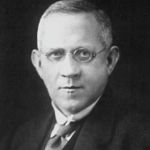
#9,226
Most Influential Person Across History
English chemist
Martin Lowry's AcademicInfluence.com Rankings

Download Badge
Chemistry
Why Is Martin Lowry Influential?
(Suggest an Edit or Addition)According to Wikipedia, Thomas Martin Lowry was an English physical chemist who developed the Brønsted–Lowry acid–base theory simultaneously with and independently of Johannes Nicolaus Brønsted and was a founder-member and president of the Faraday Society.
Martin Lowry's Published Works
Number of citations in a given year to any of this author's works
Total number of citations to an author for the works they published in a given year. This highlights publication of the most important work(s) by the author
Published Works
- The uniqueness of hydrogen (1923) (157)
- CCLXIX.—Studies of dynamic isomerism. Part XII. The equations for two consecutive unimolecular changes (42)
- CCCXCIX.—Studies of dynamic isomerism. Part XX. Amphoteric solvents as catalysts for the mutarotation of the sugars (39)
- The Electronic Theory of Valency (1928) (38)
- CXXV.—Studies of dynamic isomerism. I. The mutarotation of glucose (24)
- The Origin of Optical Rotatory Power (1935) (20)
- The electronic theory of valency. Part IV. The origin of acidity (20)
- CCCXL.—Studies of dynamic isomerism. Part XXV. The mechanism of catalysis by acids and bases (20)
- Optical Rotatory Power. Part IV: Rotatory Dispersion of Bornyl and Menthyl Xanthates, Especially in the Region of Absorption (1934) (20)
- The Properties of Silica: an Introduction to the Properties of Substances in the Solid Non-conducting State (1929) (18)
- Optical Rotatory Dispersion. Part III: The Rotatory Dispersion of Quartz in the Infra-Red, Visible and Ultra-Violet Regions of the Spectrum (18)
- The Optical Rotatory Power of Quartz on Either Side of an Infra-Red Absorption Band (1930) (18)
- XXVI.—Studies of the terpenes and allied compounds. Nitrocamphor and its derivatives. IV. Nitrocamphor as an example of dynamic isomerism (17)
- CLXXXIX.—Studies of dynamic isomerism. Part XIX. Experiments on the arrest of mutarotation of tetramethylglucose (16)
- Co‐ordination and acidity (1923) (16)
- Optical Rotatory Power. (1930) (16)
- The electronic theory of valency. Part I. Intramolecular ionisation (16)
- XCIX.—Studies of electrovalency. Part I. The polarity of double bonds (16)
- CCCXXXIX.—Studies of dynamic isomerism. Part XXIV. Neutral-salt action in mutarotation (13)
- Studies of Co-Ordination. Part I. Absorption Spectra and Co-Ordination of Some Cupric Compounds (1924) (13)
- CLXXXVIII.—Studies of dynamic isomerism. Part XVIII. The mechanism of mutarotation (13)
- Historical Introduction to Chemistry (12)
- CXL.—Studies of valency. Part XV. Absorption spectra of polyhalide ions (1931) (12)
- The physical chemistry of the metals. By Rudolph Schenck. Translated and annotated by R. S. Dean. (New York: John Wiley and Sons, Inc.; London: Chapman and Hall, Ltd. 1919.) Price 17s, 6d, net (1920) (11)
- CXXXI.—The properties of ammonium nitrate. Part I. The freezing point and transition-temperatures (10)
- CCCLXXXIX.—Studies of valency. Part XIV. An optically active telluronium salt: phenyl-p-tolyl-methyltelluronium iodide (10)
- The Mutarotation of Galactose (9)
- LXII.—The rotatory dispersive power of organic compounds. Part X. The preparation and properties of pure ethyl tartrate (9)
- The Electrical Conductivity and Other Properties of Sodium Hydroxide in Aqueous Solution as Elucidating the Mechanism of Conduction (9)
- 397. The rotatory dispersive power of organic compounds. Part XX. Rotatory dispersion and circular dichroism of camphor-β-sulphonic acid in the region of absorption (1932) (8)
- The constitution of water (8)
- The Molecular Dimensions of Organic Compounds. Part I. General Considerations (1929) (8)
- CX.—The properties of ammonium nitrate. Part II. Ammonium nitrate and water (8)
- Structure of the Atom (1936) (8)
- CCLXXIII.—Studies of dynamic isomerism. Part XVI. The mutarotation of beryllium benzoylcamphor. Formation of an additive compound with chloroform. The optical activity of beryllium (8)
- CXV.—The rotatory dispersive power of organic compounds. Part II. The form of the rotatorydispersion curves (7)
- The Silver Voltameter. Part I. Part II (7)
- Valence and the structure of atoms and molecules. By Prof. G. N. Lewis. Pp. 172. American Chemical Monograph Series. New York: The Chemical Catalog Co., Inc., 1923. Price $3 (1924) (7)
- CIX.—The properties of the chloride of sulphur. Part I. Freezing points (7)
- XLV.—New halogen derivatives of camphor. Part VI. β-Bromocamphor-α-sulphonic acid. Part VII. The constitution of the Reychler series of camphorsulphonic acids. Experiments on chlorosulphoxides (7)
- CCCCXXI.—Studies of valency. Part XII. Isomeric derivatives of diethyl telluride (7)
- Optical Rotatory Power of Vapours. Part I. Rotatory Dispersion of Camphor and of Camphorquinone, Especially in the Region of Absorption (1932) (7)
- CXLII.—Studies of the terpenes and allied compounds. The sulphonation of camphor. I. Camphorsulphonic acid (reychler) : the formation of anhydramides (7)
- CCCXLVI.—The rotatory dispersive power of organic compounds. Part XIII. The significance of simple rotatory dispersion. Rotatory dispersion of camphorquinone and of sucrose (7)
- CLXII.—The purification and properties of acetic acid (7)
- CCLXX.—Studies of valency. Part XIII. Further experiments on the molecular structure of the quadrivalent derivatives of tellurium (7)
- CX.—The properties of cold-worked metals. Part I. The density of metallic filings (6)
- Determination of the catalytic coefficient of the hydroxyl ion in the mutarotation of glucose and lactose (6)
- Simple and complex rotatory dispersion (6)
- LXXXIV.—The persulphuric acids (6)
- XII.—Studies of dynamic isomerism. Part VI. The influence of impurities on the mutarotation of nitrocamphor (6)
- Optical Rotatory Dispersion. Part I: The Natural and Magnetic Rotatory Dispersion in Quartz of Light in the Visible Region of the Spectrum (5)
- XCVIII.—Studies of the terpenes and allied compounds. Nitrocamphor and its derivatives. I. Stereoisomeric chloro- and bromo-nitrocamphors. II. Pseudonitrocamphor. III. Camphoryloxime (camphonitrophenol) (5)
- LXXXIX.—The rotatory dispersive power of organic compounds. Part XV. Borneol, camphor, and camphorquinone. The origin of complex and anomalous rotatory dispersion (5)
- Introductory address to Part II: applications in organic chemistry of the electronic theory of valency (5)
- 278. The rotatory dispersion of organic compounds. Part XXIII. Rotatory dispersion and circular dichroism of aldehydic sugars (1933) (5)
- 155. The rotatory dispersion of organic compounds. Part XXV. Open-chain derivatives of arabinose, fructose, and fucose. Optical cancellation in penta-acetyl µ-fructose (1935) (5)
- Molecular structure and physical properties of prussic acid. Part I. —Refractive dispersion of prussic acid and its homologues (1932) (5)
- Some factors influencing co‐ordination (1923) (5)
- Induced Asymmetry of Unsaturated Radicals in Optically Active Compounds (1924) (5)
- Some refractive indices of benzene and cyclohexane (1923) (5)
- CCCL.—Studies in valency. Part XI. Molecular conductivities and extinction coefficients of derivatives of cyclotelluropentane (5)
- CXXIX.—The rotatory dispersive power of organic compounds. Part VI. Complex rotatory dispersion in ethyl tartrate (5)
- CLXXXII.—The properties of the chlorides of sulphur. Part II. Molecular extinction coefficients (5)
- Refractive Dispersion of Organic Compounds. Part I. Experimental Methods. Part II. Cyclohexane. Part III. Benzene (1931) (5)
- CCXXV.—Studies of dynamic isomerism. Part XXIII. Mutarotation in aqueous alcohols (5)
- CLVII.—Studies of dynamic isomerism. III. Solubility as a means of determining the proportions of dynamic isomerides in solution. Equilibrium in solutions of glucose and of galactose (5)
- Refractive Dispersion of Organic Compounds. IX. Optical Exaltation in Unsaturated Hydrocarbons Containing Conjugated Double Bonds (1937) (5)
- CXI.—The properties of ammonium nitrate. Part III. Ammonium nitrate and sodium nitrate (5)
- XCI.—Studies of dynamic isomerism. Part XXVI. Consecutive changes in the mutarotation of galactose (5)
- A Class Book of Physical Chemistry (4)
- Static and Dynamic Isomerism in Prototropic Compounds. (1927) (4)
- LXXXIII.—Studies of valency. Part V. Absorption spectra of halogen and sulphonic derivatives of camphor: origin of the ketonic absorption band (4)
- XLIII.—The properties of nicotine and its derivatives. Part III. Chloronicotine and methylnicotone (1931) (4)
- 156. The rotatory dispersion of organic compounds. Part XXVI. Acetoin (1935) (4)
- Introductory paper. Some modern aspects of the problem of optical rotatory power (4)
- The Mechanism of Chemical Change. Part II. Catalysis of the Mutarotation of Beryllium Benzoylcamphor (1931) (4)
- XLIV.—The properties of the chlorides of sulphur. Part V. Metastable states (1931) (4)
- The silver voltameter. Part III.―The solvent properties of silver nitrate solutions (1914) (3)
- XII.—The rotatory dispersive power of organic compounds. Part V. A comparison of the optical and magnetic rotatory dispersions in some optically active liquids (3)
- The Mechanism of Chemical Change. I. Promotion and Arrest of the Mutarotation of Tetra-Acetylglucose in Ethyl Acetate (1928) (3)
- Pasteur as Chemist (1923) (3)
- The Cotton Effect (1933) (3)
- CCXLIII.—Studies of valency. Part IV. Absorption spectra of camphor, benzylidenecamphor, and camphorquinone. Optical evidence of two types of conjugation (3)
- CCCCXX.—Studies of dynamic isomerism. Part XXVIII. Absorption spectra of the ketonic and enolic forms of an α-diketone (3)
- LIII.—Camphor-β-thiol (3)
- LVIII.—The decomposition of nitric esters by lime (3)
- CLVI.—Studies of dynamic isomerism. II. Solubility as a means of determining the proportions of dynamic isomerides in solution. Equilibrium between the normal and pseudo-nitro-derivatives of camphor (3)
- 157. The rotatory dispersion of organic compounds. Part XXVII. Menthone and carvomenthone (1935) (3)
- Studies of Co-Ordination. Part II. Absorption Spectra of Metallic Derivatives of Benzoylcamphor (1931) (3)
- The use of co‐ordination compounds in analysis (1923) (3)
- Optical Rotatory Dispersion: A Tribute to the Memory of Biot (1774–1862) (1926) (3)
- CVI.—The properties of the chlorides of sulphur. Part III. Dielectric constants (3)
- LIX.—Studies of the terpenes and allied compounds. Stereoisomeric derivatives of camphor (3)
- Osmotic pressure from the standpoint of the kinetic theory (3)
- Optical activity in ketones. The rotatory dispersion and circular dichroism of m-methyl cyclohexanone and of pulegone in their ketonic absorption bands (1937) (3)
- Bakerian Lecture: Optical Rotatory Dispersion. Part II: Tartaric Acid and the Tartrates (3)
- CCXXXIV.—Studies of electrovalency. Part II. Co-ordinated hydrogen (3)
- Stability of co‐ordination compounds (1923) (3)
- Influence of temperature on the conductivity of electrolytic solutions (3)
- XLIII.—Studies of valency. Part VIII. Extinction coefficients and molecular conductivities of Vernon's isomeric α- and β-dimethyltelluronium salts. The molecular structure of quadrivalent tellurium compounds (3)
- XCII.—Nitrocamphor and its derivatives. V. sesquiCamphorylhydroxylamine, a product of the spontaneous decomposition of nitrocamphor. VI. Camphoryloxime-anhydride. VII. β-Bromo-α′-nitrocamphor. β- and π-bromocamphoryloximes (3)
- 318. The rotatory dispersion of organic compounds. Part XXVIII. The ultra-violet absorption of ketones (1935) (3)
- Intramolecular ionisation in organic compounds (3)
- Measurement of Rotatory Dispersive Power in the Visible and Ultra-Violet Regions of the Spectrum (1908) (3)
- CLXXI.—The rotatory dispersive power of organic compounds. Part XVI. Halogen derivatives of camphor. Optical superposition in the camphor series (2)
- CCI.—The rotatory dispersive power of organic compounds. Part XVII. β- and π-Sulphonic derivatives of camphor (2)
- CXXXI.—The rotatory dispersive power of organic compounds. Part VIII. An exact definition of normal and anomalous rotatory dispersion (2)
- CCIX.—Note on the theory of free rotation (2)
- The properties of powders. Part I.—The caking of salts (2)
- 305. Properties of the oxides of nitrogen. Part V. Combustion in the system nitric anhydride–ozone (1936) (2)
- General discussion on hydrates in solution (2)
- The manufacture of TNT during the war (1922) (2)
- A Photographic Method of Measuring Refractive Indices (1929) (2)
- Refractive dispersion of organic compounds part VI-Refractivities of the oxygen, carbonyl, and carboxyl radicals. Origin of optical rotatory power and of the anomalous rotatory dispersion of aldehydes and ketones (1934) (2)
- CCLXI.—Studies of valency. Part X. Electrometric titration of Vernon's α- and β-dimethyltelluronium bases (2)
- Historical introduction to chemistry by T.M. Lowry. (2)
- C.—Studies of dynamic isomerism. Part XXI. The velocity of mutarotation of tetramethylglucose and of tetra-acetylglucose in aqueous acetone (2)
- Adhesive Forces in Surface Films. (1931) (2)
- Is a true monomolecular action possible (2)
- LXXXIV.—Studies of valency. Part VI. General and selective absorption of halogen derivatives of methane. The origin of general absorption (2)
- The Electrical Conductivity and other Properties of Sodium Hydroxide in Aqueous Solution, as Elucidating the Mechanism of Conduction. (2)
- Co‐ordination and the election (1923) (2)
- 303. Properties of the oxides of nitrogen. Part VI. Flame propagation in the system nitric anhydride–ozone (1937) (2)
- CCXXV.—Studies of valency. Part IX. Molecular structure of thallium salts. (a) thallium triiodide; (b) alkyl derivatives (2)
- 111. Properties of the oxides of nitrogen. Part VII. Flame propagation in the system dinitrogen pentoxide–ozone (1938) (2)
- The phenomena of luminosity and their possible correlation with radio-activity (2)
- The mechanism of Chemical change. —Part III. mutarotation of Aluminium Benzoylcamphor (1931) (2)
- The Silver Voltameter. Part I. and Part II (1907) (2)
- Magnetic Properties in Relation to Chemical Constitution (2)
- CXLIII.—Studies of the terpenes and allied compounds. The sulphonation of camphor. II. β-Bromocamphor and its derivatives. β-Bromocamphoric acid (2)
- Formulæ and Equations in Nuclear Chemistry (1935) (2)
- Colloid science applied to biology. A general discussion (1)
- The properties of powders. Part II. Expansion and shrinkage during caking of potassium carbonate (1)
- 40. The rotatory dispersion of organic compounds. Part XXX. Campholic aldehyde (1937) (1)
- CLXXX.—The properties of nicotine and its derivatives. Part I. Molecular extinction coefficients (1)
- An oxidizable variety of nitrogen (1)
- Electrons, Atoms and Molecules (1926) (1)
- Properties of powders. Part IX. The scattering of light by graded particles in suspension (1)
- CXIV.—Nitrocamphor and its derivatives. Part VIII. The action of formamide on nitrocamphor (1)
- Physical methods in chemistry (1934) (1)
- Recent Advances in Stereochemistry (1927) (1)
- CI. The electronic theory of valency—Part IV. The origin of acidity (1924) (1)
- XXXI.—The rotatory dispersive power of organic compounds. Part IX. Simple rotatory dispersion in the terpene series (1)
- CLIII.—New halogen derivatives of camphor. Part I. α′-Chlorocamphor; with a note on isomerism, static and dynamic (1)
- The transmission of chemical affinity by single bonds (1)
- The electronic theory of valency. Part VII. The etch figures of sylvine (1)
- Co‐ordination of organic molecules (1924) (1)
- Dr. E. W. Washburn (1934) (1)
- CXXV.—The properties of the chlorides of sulphur. Part IV. Density and surface tension, with an appendix on the parachors of mixtures (1)
- The Electronic Theory of Chemistry: an Introductory Account (1935) (1)
- CXXI.—The oxidation of atmospheric nitrogen in presence of ozone (1)
- Graphitic Conduction in Conjugated Chains of Carbon Atoms: A Contribution to Armstrong's Theory of Chemical Change (1925) (1)
- The Conductivity of Solutions and the Modern Dis sociation Theory (1930) (1)
- CCCLXXXVII.—The rotatory dispersion of organic compounds. Part XIX . The validity of Drude's equation (1)
- CLXXIX.—Studies of dynamic isomerism. Part XXVII. The absorption spectra of prototropic compounds. Physical properties of the stable and labile forms of benzoylcamphor (1)
- The Mechanism of Homogeneous Organic Reactions from the, Physical-Chemical Standpoint (1928) (1)
- CCI.—Studies of dynamic isomerism. Part XIII. Camphorcarboxylamide and camphorcarboxypiperidide. An illustration of barlow and pope's hypothesis (1)
- Polarimetric Methods in Chemistry (1934) (1)
- LXV.—Studies of dynamic isomerism. Part X. The relationship between absorption spectra and isomeric change. Absorption spectra of camphorcarboxylic acid and its derivatives (1)
- CXV. The electronic theory of valency.—I. Intramolecular ionization (1923) (1)
- Combustion from Heracleitos to Lavoisier. By J. C. Gregory B. SC., F.I.C. (London: Edward Arnold & Co. 1934. Pp. vii + 231. Price 10s. 6d.) (1935) (1)
- CL.—Studies of dynamic isomerism. Part XVII. The mutarotation of aluminium benzoylcamphor (1)
- CLXXXVIII.—The rotatory dispersive power of organic compounds. Part XI. The molecular weight of ethyl tartrate and the origin of anomalous rotatory dispersion in tartaric acid and its derivatives (1)
- The optical rotation of liquids : its variation with wave length temperature, solvent and concentration (1932) (1)
- IV. The electronic theory of valency.—Part VI. The molecular structure of strong and weak electrolytes. (b) Reversible ionization (1928) (1)
- XIII.—Studies of dynamic isomerism. Part VII. Note on the action of carbonyl chloride as an agent for arresting isomeric change (1)
- XI.—The rotatory dispersive power of organic compounds. Part IV. Magnetic rotation and dispersion in some simple organic liquids (1)
- The properties of powders. Part IV. The grading of powders by elutriation (1)
- Messel memorial contribution solutions (1928) (1)
- An application to electrolytes of the hydrate theory of solutions (1)
- XCI.—Studies of dynamic isomerism. Part VIII. The relationship between absorption spectra and isomeric change. Absorption spectra of halogen, nitro-, and methyl derivatives of camphor (1)
- The Refractive Indices of Nicotine (1927) (1)
- 218. The properties of nicotine and its derivatives. Part VI. Electrical conductivities. Part VII. Electrometric titrations (1932) (1)
- 243. Studies of rotatory dispersion. Part XXIX. Absorption and circular dichroism of camphorquinone (1936) (1)
- Optical Rotatory Dispersion. (1922) (1)
- LXXIII.—New halogen derivatives of camphor. Part II. α′-Bromocamphor (1)
- [Letters to Editor] (1926) (0)
- The Rotatory Dispersion of Tartaric Acid (1924) (0)
- A Method of producing an intense Cadmium Spectrum, with a proposal for the use of Mercury and Cadmium as Standards in Refractometry (1907) (0)
- 217. The properties of nicotine and its derivatives. Part IV. Refractive dispersion. Part V. Magnetic rotatory dispersion (0)
- CVII.—Studies of dynamic isomerism. Part V. Isomeric sulphonic derivatives of camphor (0)
- Dynamic isomerism of the reducing sugars (0)
- CVI.—Studies of dynamic isomerism. Part IV. Stereoisomeric halogen derivatives of camphor (0)
- 27. Studies of valency. Part XV. The dielectric constants of phosphorus trichloride and pentachloride (1932) (0)
- CI. The electronic theory of valency.—Part II. Intramolecular ionization in organic compounds (1923) (0)
- 1. Properties of the oxides of nitrogen. Part II. The binary system N2O3–H2O (1935) (0)
- 2. Properties of the oxides of nitrogen. Part III. The pseudo-binary system N2O4–H2O (1936) (0)
- XXXVIII. A method of producing an intense cadmium spectrum, with a proposal for the use of mercury and cadmium as standards in refractometry (1909) (0)
- Section III. General discussion (0)
- Polarimetric Methods in Chemistry (1934) (0)
- Mercury lamps for use in spectroscopy, polarimetry, and saccharimetry (0)
- A contribution to the thermochemistry of organic compounds. By Dr. Endre Berner. Pp. 134. Oslo: Morten Johansens Boktrykkeri, 1926 (1927) (0)
- The Stereochemistry of Tellurium (1929) (0)
- The properties of powders. Part V. A new elutriator for rapid use (0)
- 339. The rotatory dispersive power of organic compounds. Part XXIV. Ascorbic acid (1933) (0)
- 3. Properties of the oxides of nitrogen. Part IV. Formation of two liquid layers in mixtures of nitrogen peroxide and water (1936) (0)
- CCLVII.—Studies of dynamic isomerism. Part XXII. Methyl alcohol as an amphoteric solvent for the mutarotation of the sugars (0)
- Some Points in the Use and Design of Refractometers (1911) (0)
- Strained and strainless rings (1928) (0)
- An oxidizable variety of nitrogen. Discussion (0)
- On the electrolysis of salt solutions in liquefied sulphur dioxide at low temperatures. Discussion (0)
- An Improved Method of Ultra-Violet Polarimetry. Anomalous Rotary Dispersion of Sodium Tartrate (1928) (0)
- Tartrates and racemates (1935) (0)
- XCIV.—Studies of dynamic isomerism. Part XIV. Successive isomeric changes in camphorcarboxylamide and camphorcarboxypiperidide (0)
- The structure of atoms. By Alfred stock. Translated from the second German edition by S. Sugden, M.Sc. Pp. viii + 88. London: Methuen and Co., Ltd., 1923. Price 6s. net (1923) (0)
- The electronic theory of valency, part V. The molecular structure of strong and weak electrolytes (a) complete ionisation (0)
- XXIII.The electronic theory of valency.—Part VII.The etch-figures of sylvine (1930) (0)
- General and physical chemistry (0)
- CVIII.The electronic theory of valency — Part V. The molecular structure of strong and weak electrolytes: (a) complete ionization (1928) (0)
- CXLIX.—Studies of dynamic isomerism. Part IX. The relationship between absorption spectra and isomeric change. Absorption spectra of sulphonic derivatives of camphor (0)
- (1)Some Physical Properties of the Covalent Link in Chemistry (1934) (0)
- Old and new theories of co‐ordination (1923) (0)
- CXXX.—The rotatory dispersive power of organic compounds. Part VII. Complex rotatory dispersion in methyl tartrate (0)
- XLV. Osmotic pressure from the standpoint of the kinetic theory (1907) (0)
- Text-books of Physical Chemistry (1928) (0)
- Physical Chemistry: Its Bearing on Biology and Medicine. By Prof. J. C. Philip, D.Sc., F.R.S. Third Edition. Pp. vi+367. London: Edward Arnold and Co., 1925. Price 8s 6d (1925) (0)
- CXLII.—The rotatory dispersive power of organic compounds. Part III. The measurement of magnetic rotatory dispersion (0)
- CCX.—New halogen derivatives of camphor. Part III. α′β- and α′π-Dibromocamphor (0)
- A new pattern of thermostat designed to supply a rapid stream of water heated to a constant temperature (0)
- Chemistry and Atomic structure. By J. D. Main smith, Ph.d., B.Sc. Pp. 221. London: E. Benn, Ltd., 1924. Price, 12s. 6d (1925) (0)
- CXIV.—The rotatory dispersive power of organic compounds. Part I. The measurement of rotatory dispersion (0)
- A Blue Flame in the System N2O5/O3 (1935) (0)
- Rotatory dispersion in the amine series I―d-spiroheptane-diamine and its derivatives (1937) (0)
- The Parachor. (0)
- CCCLXXXVI.—The rotatory dispersion of organic compounds. Part XVIII. Potassium borotartrate (0)
- Introductory address. “Free radicals and ions as factors in chemical change.” (1934) (0)
- A silica-jacketed silica polarimeter tube (0)
- Osmotic Pressure. By Alexander Findlay. Monographs on Inorganic and Physical Chemistry. Second edition, with 10 figures. Pp. 116. (London: Longmans, Green and Co. 1919.) Price 6s. net. (1919) (0)
- A Comprehensive, Treatise on Inorganic and Theoretical Chemistry (1927) (0)
- Physical Optics (1935) (0)
- An enclosed cadmium arc for use with the polarimeter (0)
- On an improved temperature control for the Pulfrich refractometer (1923) (0)
- A method of representing co‐ordinated compounds (1923) (0)
- Asymmetric Nitrogen Atoms in Natural Products (1926) (0)
- The Manufacture of Acids during the War (1922) (0)
- Chemistry of radioactive substances. By A. S. Russell. Pp. xi+173. London: John Murray, 1922. Price 6s. net (1922) (0)
- CCIX.—The rotatory dispersive power of organic compounds. Part XII. Octyl alcohol and octyl oxalate (0)
- A general discussion on Homogeneous Catalysis. Introductory paper. Some problems in Homogeneous Catalysis (0)
- Pure Substances: their Preparation, Properties, and Uses (1929) (0)
- CVIII.—The design of gas-regulators for thermostats (0)
- Reviews-The persulphuric acids (0)
- Catalysis in an Inert Solvent (1932) (0)
- Note on the calculation of dispersion-equations (0)
- The properties of powders. Part III. The powdering of minerals by decrepitation (0)
- Recent Experiments on the Crystallisation of Minerals (1906) (0)
- XL.—The rotatory dispersive power of organic compounds. Part XIV. Simple dispersion in 1-methylcyclohexylidene-4-acetic acid (0)
- CVII. The electronic theory of valency.—Part III. The transmission of chemical affinity by single bonds (1923) (0)
- CXXVII.—The properties of cold-worked metals. Part II. Methods of measuring small changes of density produced by annealing (0)
- The Coefficient of lonisation of a Fused Salt (1927) (0)
- CCXXXV.—The properties of nicotine and its derivatives. Part II. Optical rotatory power and rotatory dispersion (0)
- Stereoisomerism among Derivatives of Diphenyl (1923) (0)
- Persulphuric acids (0)
- Configuration of Quadrivalent Atoms (1929) (0)
- Note on an extended theory of acids and bases (0)
- CXXVII.—Studies of dynamic isomerism. Part XV. The influence of light on isomeric change (0)
- Other factors influencing co‐ordination (1923) (0)
- Complex salts. By William Thomas, B.A., M.Sc., Ph.D. Pp. 1–118. London: Blackie and Son, Ltd., 1924. Price, 10s. net (1925) (0)
- Contemporary Birthdays (0)
- Physical Foundations of Chemical Theory (1929) (0)
This paper list is powered by the following services:


Other Resources About Martin Lowry
What Schools Are Affiliated With Martin Lowry?
Martin Lowry is affiliated with the following schools:
