Owen Willans Richardson
#4,522
Most Influential Person Across History
British physicist
Owen Willans Richardson's AcademicInfluence.com Rankings

Download Badge
Physics
Why Is Owen Willans Richardson Influential?
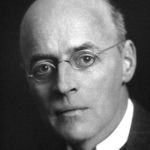
(Suggest an Edit or Addition)According to Wikipedia, Sir Owen Willans Richardson, FRS was a British physicist who won the Nobel Prize in Physics in 1928 for his work on thermionic emission, which led to Richardson's law. Biography Richardson was born in Dewsbury, Yorkshire, England, the only son of Joshua Henry and Charlotte Maria Richardson. He was educated at Batley Grammar School and Trinity College, Cambridge, where he gained First Class Honours in Natural Sciences. He then got a DSc from University College London in 1904.
Owen Willans Richardson's Published Works
Number of citations in a given year to any of this author's works
Total number of citations to an author for the works they published in a given year. This highlights publication of the most important work(s) by the author
Published Works
- Electron Emission from Metals as a Function of Temperature (1924) (180)
- THE PHOTOELECTRIC EFFECT. (1912) (112)
- LI. Some applications of the electron theory of matter (1912) (75)
- Molecular hydrogen and its spectrum (1934) (73)
- The electrical conductivity imparted to a vacuum by hot conductors (56)
- LIII. The photoelectric effect (1912) (49)
- I. The diffusion of hydrogen through hot platinum (1904) (46)
- Problems of Physics (1921) (39)
- A Mechanical Effect Accompanying Magnetization (1908) (38)
- Discussion on the structure of atomic nuclei (1929) (37)
- The thermionic work-functions and photo-electric thresholds of the alkali metals (1925) (35)
- The Electron Theory Of Matter (29)
- Determinations of the Rydberg constants, e/m, and the fine structures of Hα and Dα by means of a reflexion echelon (1940) (27)
- Applications of Interferometry (26)
- LXVII. The distribution of the molecules of gas in a field of force, with applications to the theory of electrons (1914) (25)
- XXV. The solubility and diffusion in solution of dissociated gases (1904) (23)
- XXX. The kinetic energy of the negative electrons emitted by hot bodies (1908) (21)
- LII. The theory of photoelectric action (1912) (16)
- The Emission of Electrons from Tungsten at High Temperatures: An Experimental Proof That the Electric Current in Metals Is Carried by Electrons (1913) (16)
- The secondary electron emission from metals in the low primary energy region (1943) (16)
- The Spectrum of H$_{2}$. The Bands Analogous to the Parhelium Line Spectrum. Part II (1929) (15)
- On a minimum proper time and its applications (1) to the number of the chemical elements (2) to some uncertainty relations (1928) (13)
- The Emission of Secondary Electrons and the Excitation of Soft X-Rays (1928) (12)
- Total secondary electron emission from polycrystalline Nickel (1930) (12)
- The positive Ions from hot metals (1914) (12)
- On the Extraction of Electrons from Cold Conductors in Intense Electric Fields (1928) (12)
- The Influence of Gases on the Emission of Electrons and Ions from Hot Metals (1915) (12)
- THE EMISSION OF ELECTRONS FROM TUNGSTEN AT HIGH TEMPERATURES: AN EXPERIMENTAL PROOF THAT THE ELECTRIC CURRENT IN METALS IS CARRIED BY ELECTRONS. (1913) (12)
- The Spectrum of HFormula: The Bands Analogous to the Ortho-Helium Line Spectrum (1929) (10)
- On the ground state of (H2), the molecular Ion (H2 +) and wave mechanics (1935) (10)
- The Emission of Electrons under the Influence of Chemical Action (1930) (10)
- The fine structure of the spectral lines of H2: measurements with a reflexion echelon (1947) (10)
- The α Rays (10)
- XXIII. The electron theory of contact electromotive force and thermoelectricity (1912) (9)
- Discussion on Ultra-Penetrating Rays (1931) (8)
- XV. The asymmetric emission of secondary rays (8)
- LXIV. The specific charge of the ions emitted by hot bodies (1908) (8)
- Observations on the Excitation of Helium Spectra (1916) (7)
- XXX. The rate of recombination of ions in gases (1905) (7)
- XLV. The photoelectric effect.—II (1913) (7)
- Fine Structure in the Hydrogen Band Lines. (1931) (7)
- XIV. The effect of gases on the contact difference of potential between metals at different temperatures (7)
- LVI. The theory of photoelectric and photochemical action (1914) (7)
- The Excitation of Soft X-Rays (1928) (6)
- Diurnal Variation of Ionisation in Closed Vessels (1906) (6)
- The test of the wave mechanics in molecular spectra and some recent developments in the spectrum of (H2) (1938) (6)
- Electron emission under the influence of chemical action at higher gas pressures, and some photo-electric experiments with liquid alloys (1927) (5)
- The origin of thermal ionisation from carbon (1914) (5)
- The Emission of Soft X-Rays by Different Elements at Higher Voltages (1927) (5)
- LXXVI. The kinetic energy of the ions emitted by hot bodies (1908) (5)
- XXXVI. The absorption of heat produced by the emission of ions from hot bodies: II (1913) (5)
- On the Positive Ionization produced by Hot Platinum in Air at Low Pressures (1903) (5)
- Note on the Direct Determination of h (1914) (4)
- Corrigenda: Determinations of the Rydberg Constants, e/m, and the Fine Structures of H$_{\alpha}$ and D$_{\alpha}$ by means of a Reflexion Echelon (1940) (4)
- New Bands Ending on the 1 s$\sigma $ 2p$\sigma \,^{1}\Sigma _{u}$ State of H$_{2}$ (1938) (4)
- The Photo-Electric Action of X-Rays (1918) (4)
- Part I. Band spectra in the visible and ultra-violet regions. Nomenclature and symbolism for the spectra of diatomic molecules (4)
- The Striking and Breaking Potentials for Electron Discharges in Hydrogen (1924) (4)
- Diurnal Variation of the Ionisation in Closed Vessels (4)
- Thermionic emission from systems with multiple thresholds (4)
- On a P, Q and R Combination in the Many-Lined Spectrum of Hydrogen (1924) (4)
- The ionisation produced by hot platinum in different gases (1906) (4)
- XCVII. Photoelectric and photochemical activity (1924) (4)
- The Band Systems Ending on the 1s σ 2s σ 1 Σ g ( 1 X g ) State of H 2 . Part I (1937) (3)
- LXIV. Contact difference of potential and thermionic emission (1922) (3)
- Note on a Connection between the Visible and Ultra-Violet Bands of Hydrogen (1927) (3)
- XXI. The complete photoelectric emission (1916) (3)
- The Spectrum of H$_{2}$.The Bands Ending on 2p$^{3}\Pi $ Levels (1931) (3)
- The Spectrum of HFormula: The Bands Analogous to the Parhelium Line Spectrum. Part III (1929) (3)
- LXVII. Note on the diffusion of neon through hot quartz (1911) (3)
- XLVIII. The heat liberated during the absorption of electrons by different metals (1911) (3)
- The Hydrogen Band Spectrum: New Band Systems in the Violet (1927) (3)
- A Comparative Study of the Excitation of Soft X-Rays from Single Crystal Surfaces and from Polycrystalline Surfaces of Graphite and Aluminium (1930) (3)
- The Energy Functions of the HFormula Molecules (1929) (3)
- Regularities in the Secondary Spectrum of Hydrogen (1925) (2)
- The fine structure of the 4d3∑, 3Πcd, 3Δd→2p3Πcd transitions of the H2 spectrum (1953) (2)
- The soft X-Ray levels of iron, cobalt, nickel and copper (1928) (2)
- The Spectrum of H$_{2}$. Part II. The Band Systems due to Transitions from Four New Triplet States to 2p$^{3}\Pi $ (1934) (2)
- The fine structure of the lines of the H2 spectrum which go down to the 2p3π states (1947) (2)
- XXVIII. Metallic conduction (1915) (2)
- XCVI. The generalized quantum conditions (1923) (2)
- The Spectrum of H$_{2}$. Part III. New Bands and Band Systems Ending on 2s$^{3}\Sigma $ and an Extension of the Singlet System $^{1}$Q $\rightarrow $ 2p $^{1}\Sigma $ (1934) (2)
- On the Intensity Distribution among the Lines of Certain Bands in the Spectrum of the Hydrogen Molecule (1927) (2)
- The excitation of soft X-Rays from some polycrystalline metal surfaces (1930) (2)
- The Structure of the Ether (1907) (2)
- CXIII.—The decomposition of oxalacetic acid phenylhydrazone in aqueous and acid solutions, and a new method of determining the concentration of hydrogen ions (2)
- THE LAWS OF PHOTOELECTRIC ACTION AND THE UNITARY THEORY OF LIGHT (LICHTQUANTEN THEORIE). (1912) (2)
- A New Connection between the Absorption Spectrum of Hydrogen and the Many Lined Spectrum (1930) (2)
- The Construction of Simple Electroscopes for Experiments on Radioactivity (1905) (1)
- Radio-Activity and the Law of Conservation of Mass (1904) (1)
- The Becquerel Rays and the Properties of Radium (1904) (1)
- CXIV.—The dissociation constants of oxalacetic acid and its phenylhydrazone (1)
- The electronic levels of H2 (1)
- The excitation of soft X-rays from a single crystal face of nickel (1930) (1)
- The Electron Theory of Contact Electromotive Force and of Thermoelectricity (1911) (1)
- LXXIV. The electron theory of thermoelectric and thermionic effects (1912) (1)
- LXVI. The positive ionization from hot salts (1911) (1)
- XXXV. The ions from hot salts (1913) (1)
- The spectrum of H2 (the ordinary hydrogen molecule) Part I—The 3, 4d 3Ʃ, II, ∆ → 2p 3II and 3s 3Ʃ → 2p 3II systems (1934) (1)
- The Magnitude of the Gyromagnetic Ratio (1923) (1)
- The Hydrogen Molecule (1928) (1)
- Structure in the Secondary Hydrogen Spectrum. II (1925) (1)
- Thermodynamics of Electron Emission (1924) (1)
- Remarks on a Paper by Mr. E. R. Stoekle entitled (1917) (1)
- The Theory of Photo-Electric and Photo-Chemical Action (0)
- Soft X-Rays from Crystal Faces (1929) (0)
- On High Permeability in Iron (1914) (0)
- The Laws of Photoelectric Action and the Unitary Theory of Light (Licht-Quanten Theorie) (1912) (0)
- A New Connexion between the Absorption Spectrum of Hydrogen and the Many Lined Spectrum (1929) (0)
- Note on the diffusion of hydrogen through palladium (0)
- The Theory of Experimental Electricity (1913) (0)
- The Positive Ionization from Hot Salts (1911) (0)
- The present state of atomic physics (0)
- Isolated Quantised Magnetic Poles. (1931) (0)
- The Spectrum of H$_{2}$. The 3d$^{1}\Delta $ and 4d$^{1}$ Levels (1933) (0)
- The Spectrum of HFormula: The Bands Analogous to the Orthohelium Line Spectrum. Part II (1929) (0)
- The Wehnelt Kathode in a High Vacuum (0)
- The alpha Rays (0)
- LXXXV. Intelligence and miscellaneous articles (1912) (0)
- Prof. Pieter Zeeman, For.Mem.R.S. (1944) (0)
- The Theory of Dispersion and the Residual Rays (1911) (0)
- New bands ending on the 1sσ 2pσ1∑u state of H2. (1938) (0)
- Sir J. J. Thomson, O.M., F.R.S. (1940) (0)
- The Fine Structure of the 4d Formula, Formula, Formula 2p Formula Transitions of the HFormula Spectrum (1953) (0)
- The Disappearing Gap in the Spectrum (0)
- The diffusion of hydrogen throuth hot platinum (0)
- The Application of the Ionization from Hot Bodies to Thermometric Work at High Temperatures (1908) (0)
- The Spectrum of HFormula. The 3dFormula and 4dFormula Levels (1933) (0)
- Spinning Electrons (0)
- On the excitation of radiation by electron impact and on the photoelectric effect (1935) (0)
- The Disappearing Gap in the Spectrum (1923) (0)
- Two Experiments Illustrating Novel Properties of the Electron Currents from Hot Metals (1914) (0)
This paper list is powered by the following services:


Other Resources About Owen Willans Richardson
What Schools Are Affiliated With Owen Willans Richardson?
Owen Willans Richardson is affiliated with the following schools:
