Robert Strutt, 4th Baron Rayleigh
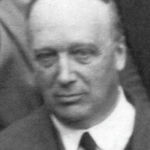
British physicist
Robert Strutt, 4th Baron Rayleigh's AcademicInfluence.com Rankings

Download Badge
Physics
Why Is Robert Strutt, 4th Baron Rayleigh Influential?
(Suggest an Edit or Addition)According to Wikipedia, Robert John Strutt, 4th Baron Rayleigh was a British peer and physicist. He discovered "active nitrogen" and was the first to distinguish the glow of the night sky. Early life and education Strutt was born at Terling Place, the family home near Witham, Essex, the eldest son of John William Strutt, 3rd Baron Rayleigh and his wife Evelyn Georgiana Mary . He was thus a nephew of Arthur Balfour and of Eleanor Mildred Sidgwick. He was educated at Eton College and Trinity College, Cambridge, where he initially read mathematics, but changed after two terms to Natural Sciences. He became a research student in physics at the Cavendish Laboratory under J. J. Thomson, whose biography he subsequently wrote. His work at this time was on discharge of electricity through gases, including early work on x-rays and electrons. He wrote one of the first books on radioactivity, The Becquerel rays and the properties of radium . He was awarded the Coutts Trotter studentship in 1898 and was a Fellow of Trinity College 1900–1906. He received his M.A. in 1901.
Robert Strutt, 4th Baron Rayleigh's Published Works
Published Works
- Bakerian Lecture. A Chemically Active Modification of Nitrogen, Produced by the Electric Discharge (1911) (68)
- On the accumulation of helium in geological time (1908) (59)
- On the distribution of radium in the Earth's crust and on the Earth’s internal heat (1906) (58)
- IV. Measurements of the amount of oil necessary iu order to check the motions of camphor upon water (37)
- Active Nitrogen (32)
- Absorption bands of atmospheric ozone in the spectra of sun and stars (1917) (31)
- The Light Scattered by Gases: Its Polarisation and Intensity (1918) (30)
- The accumulation of Helium in geological time.—IV (1910) (28)
- The ultimate shape of pebbles, natural and artificial (1942) (27)
- Helium and Radio-Activity in Rare and Common Minerals (1908) (25)
- On the radio-active minerals (1905) (21)
- Ultra-Violet Transparency of the Lower Atmosphere, and Its Relative Poverty in Ozone (1918) (21)
- An Active Modification of Nitrogen, Produced by the Electric Discharge. V (1913) (21)
- Spectroscopic investigations in connection with the active modification of nitrogen.—I. Spectrum of the afterglow (1911) (21)
- Scattering of light by dust-free air, with artificial reproduction of the blue sky.—Preliminary note (1918) (20)
- Spectroscopic investigations in connection with the active modification of nitrogen. II―Spectra of elements and compounds excited by the nitrogen (1912) (19)
- The light of the night sky: its intensity variations when analysed by colour filter.—III (1924) (18)
- Scattering of light by solid substances (1919) (17)
- On the Origin of the Gases Evolved by Mineral Springs (1907) (16)
- Measurements of the Rate at Which Helium is Produced in Thorianite and Pitchblende, with a Minimum Estimate of their Antiquity (1910) (15)
- A Chemically Active Modification of Nitrogen, Produced by the Electric Discharge. III (1912) (14)
- Bakerian lecture: A study of the line spectrum of sodium as excited by fluorescence (1919) (12)
- On the least potential difference required to produce discharge through various gases (12)
- New studies on active nitrogen. I. Brightness of the after-glow under varied conditions of concentration and temperature (1940) (12)
- Spectroscopic observations on the active modification of nitrogen. —V (1917) (11)
- A peculiar form of low potential discharge in the highest vacua (1913) (11)
- An Active Modification of Nitrogen. VII (1916) (10)
- On Helium in Saline Minerals, and Its Probable Connection with Potassium (1908) (9)
- The Afterglow of Electric Discharge (1910) (9)
- Further studies on active nitrogen. III. Experiments to show that traces of oxygen or other impurity affect primarily the walls of the vessel, and not the phenomena in the gas space (1942) (9)
- The Absorption of the Becquerel Rays by Solid and Gaseous Bodies (1900) (7)
- The Rate of Formation of Radium (1905) (6)
- The Molecular Statistics of Some Chemical Actions (1912) (6)
- On the conductivity of gases under the Becquerel rays (6)
- Duration of luminosity of electric discharge in gases and vapours (1913) (5)
- On the Radium Content of Basalt (1910) (5)
- Note on the Colour of Zircons, and Its Radioactive Origin (5)
- Luminous vapours distilled from the arc, with applications to the study of spectrum series and their origin.―II (1914) (4)
- Observations on the Fluorescence and Resonance of Sodium Vapour. II (1915) (4)
- Recombination and the long duration of the Balmer spectrum (1946) (4)
- The Leakage of Helium from Radio-Active Minerals (1909) (4)
- Absorption of helium and other gases under the electric discharge (1912) (4)
- Radium and the Sun's Heat (1903) (3)
- On the Dark Plane Which is Formed Over a Heated Wire in Dusty Air (3)
- Note on the Association of Helium and Thorium in Minerals (1907) (3)
- Note on the Spontaneous Luminosity of a Uranium Mineral (1909) (3)
- On the Intensely Penetrating Rays of Radium (3)
- The Flame Arising from the Nitrogen-Burning Arc (1911) (3)
- Joseph John Thomson, 1856 - 1940 (1941) (3)
- On the behaviour of the Becquerel and Röntgen rays in a magnetic field (3)
- Attempts to observe the production of neon or helium by electric discharge (1914) (3)
- Radio-active Substances and their Radiations (1913) (3)
- Note Supplementary to a Paper "On the Radio-Active Minerals" (1905) (2)
- Experiments Bearing upon the Origin of Spectra (1914) (2)
- On the bending of waves round a spherical obstacle (2)
- Radio-activity of Ordinary Materials (1903) (2)
- Further Observations on the Afterglow of Electric Discharge, and Kindred Phenomena (1911) (2)
- Über die aktive Modifikation des Stickstoffs (II.) (2)
- Recent studies on active nitrogen (2)
- The Occurrence of Radium with Uranium (1904) (2)
- I. Experiments, by the method of Lorentz, for the further determination of the absolute value of the British association unit of resistance, with an appendix on the determination of the pitch of a standard tuning-fork (2)
- The Ammonia Flame (1912) (2)
- On the amount of argon and helium contained in the gas from the bath springs (1)
- A Direct Estimate of the Minimum Age of Thorianite (1909) (1)
- Energy Emitted by Radio-active Bodies (1903) (1)
- Helium and Argon in Common Rocks (1)
- Presence of Neon in Radio-active Minerals (1906) (1)
- On the weight of hydrogen desiccated by liquid air (1)
- Resonance of Sodium Vapour in a Magnetic Field (1915) (1)
- Das Nachglühen der elektrischen Entladungen in Gemischen von Stickstoff mit Sauerstoff = The afterglow of electric discharge in mixtures of nitrogen with oxygen (1)
- The After-Luminosity of Electric Discharge in Hydrogen, Observed by Hertz (1912) (1)
- Observations on the Fluorescence and Resonance Radiation of Sodium Vapour. I (1915) (1)
- Fluorescent excitation of mercury by the resonance frequency and by lower frequencies. III (1932) (1)
- Note on Electric Discharge Phenomena in Rotating Silica Bulbs (1913) (1)
- An Occurrence of Helium in the Absence of Radio-Activity (1907) (1)
- Ultra-Violet Excitation of the D Line of Sodium (1)
- The Formation of Polonium from Radium (1904) (1)
- Radium and Geology (1906) (1)
- I. On the specific resistance of mercury (1)
- The light of the night-sky: Analysis of the intensity variations at three stations (1935) (1)
- Radio-activity of Ordinary Matter in connection with the Earth's internal Heat (1905) (1)
- Radio-active Transformations (1906) (1)
- Transparency of the Atmosphere for Ultra-violet Radiation (1917) (1)
- The surprising amount of energy which can be collected from gases after the electric discharge has passed (1947) (0)
- Rate of Helium Production from the Complete Series of Uranium Products (1909) (0)
- Radio-Activity of Ordinary Materials (0)
- Ultra-Violet Excitation of the D Line of Sodium (1915) (0)
- Radium and the Earth's Heat (1908) (0)
- Radio Activity (1903) (0)
- Active Nitrogen (0)
- Newton as an experimenter (1943) (0)
- Pebbles, natural and artificial, Their shape under various conditions of abrasion (1944) (0)
- Long duration of the Balmer spectrum in excited hydrogen (1944) (0)
- Experimental production of red and yellow sandstones from chalybeate water (1946) (0)
- The Stone-iron meteorites called pallasites: a synthetic study of their structure and probable mode of formation (1942) (0)
- Radio-Activity and the Rocks (1909) (0)
- New studies on active nitrogen. II. Incandescence of metals in active nitrogen, and quantitative estimates of the energy liberated (1940) (0)
- Helium and Geological Time (0)
- Helium and Geological Time (1910) (0)
- Bakerian lecture.—On the law of the pressure of gases between 75 and 150 millimetres of mercury (0)
- The Wehnelt Current Interrupter (1899) (0)
- The Afterglow of Electric Discharge in Nitrogen (1911) (0)
- Papers read to the Society, February 21, 1901. (0)
- Active Nitrogen (0)
- Newton as an experimenter (1943) (0)
- Further studies on active nitrogen IV. The ionisation associated with active nitrogen (1942) (0)
- IV. On some physical properties of argon and helium (0)
This paper list is powered by the following services:

Other Resources About Robert Strutt, 4th Baron Rayleigh
What Schools Are Affiliated With Robert Strutt, 4th Baron Rayleigh?
Robert Strutt, 4th Baron Rayleigh is affiliated with the following schools:
