Sergey Zimov
#41,779
Most Influential Person Now
Russian geophysicist
Sergey Zimov's AcademicInfluence.com Rankings
Sergey Zimovearth-sciences Degrees
Earth Sciences
#850
World Rank
#1336
Historical Rank
Geophysics
#142
World Rank
#169
Historical Rank
Download Badge
Earth Sciences
Why Is Sergey Zimov Influential?
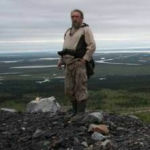
(Suggest an Edit or Addition)According to Wikipedia, Sergey Aphanasievich Zimov is a Russian geophysicist who specialises in arctic and subarctic ecology. He is the Director of Northeast Scientific Station , a senior research fellow of the Pacific Institute for Geography , and one of the founders of Pleistocene Park . He is best known for his work in advocating the theory that human overhunting of large herbivores during the Pleistocene caused Siberia's grassland-steppe ecosystem to disappear and for raising awareness as to the important roles permafrost and thermokarst lakes play in the global carbon cycle.
Sergey Zimov's Published Works
Number of citations in a given year to any of this author's works
Total number of citations to an author for the works they published in a given year. This highlights publication of the most important work(s) by the author
Published Works
- Soil organic carbon pools in the northern circumpolar permafrost region (2009) (2228)
- Vulnerability of Permafrost Carbon to Climate Change: Implications for the Global Carbon Cycle (2008) (1502)
- Methane bubbling from Siberian thaw lakes as a positive feedback to climate warming (2006) (1029)
- Permafrost and the Global Carbon Budget (2006) (943)
- Rise and Fall of the Beringian Steppe Bison (2004) (647)
- Seasonal and Annual Fluxes of Nutrients and Organic Matter from Large Rivers to the Arctic Ocean and Surrounding Seas (2012) (507)
- Steppe-Tundra Transition: A Herbivore-Driven Biome Shift at the End of the Pleistocene (1995) (410)
- North Siberian Lakes: A Methane Source Fueled by Pleistocene Carbon (1997) (346)
- Permafrost carbon: Stock and decomposability of a globally significant carbon pool (2006) (318)
- Thermokarst Lakes as a Source of Atmospheric CH4 During the Last Deglaciation (2007) (309)
- Arctic and boreal ecosystems of western North America as components of the climate system (2000) (309)
- Expert assessment of vulnerability of permafrost carbon to climate change (2013) (278)
- Controls on the composition and lability of dissolved organic matter in Siberia's Kolyma River basin (2012) (271)
- Potential carbon release from permafrost soils of Northeastern Siberia (2006) (251)
- High biolability of ancient permafrost carbon upon thaw (2013) (240)
- Seasonal changes in the age and structure of dissolved organic carbon in Siberian rivers and streams (2006) (235)
- A shift of thermokarst lakes from carbon sources to sinks during the Holocene epoch (2014) (234)
- Global Change and the Boreal Forest: Thresholds, Shifting States or Gradual Change? (2004) (220)
- Biomass offsets little or none of permafrost carbon release from soils, streams, and wildfire: an expert assessment (2016) (217)
- Siberian CO2 efflux in winter as a CO2 source and cause of seasonality in atmospheric CO2 (1996) (210)
- Methane production and bubble emissions from arctic lakes: Isotopic implications for source pathways and ages (2008) (187)
- Pleistocene Park: Return of the Mammoth's Ecosystem (2005) (185)
- Carbon dioxide and methane exchange of a north‐east Siberian tussock tundra (2005) (171)
- Winter biotic activity and production of CO2 in Siberian soils : a factor in the greenhouse effect (1993) (171)
- Snowmelt dominance of dissolved organic carbon in high‐latitude watersheds: Implications for characterization and flux of river DOC (2006) (157)
- Mammoth steppe: a high-productivity phenomenon (2012) (150)
- The global SF6 source inferred from long-term high precision atmospheric measurements and its comparison with emission inventories (2010) (133)
- Particulate organic carbon and nitrogen export from major Arctic rivers (2016) (130)
- Estimating methane emissions from northern lakes using ice‐bubble surveys (2010) (109)
- Vulnerability of permafrost carbon to global warming. Part I: model description and role of heat generated by organic matter decomposition (2008) (102)
- Carbon storage in permafrost and soils of the mammoth tundra‐steppe biome: Role in the global carbon budget (2009) (97)
- Artificial drainage and associated carbon fluxes (CO2/CH4) in a tundra ecosystem (2009) (92)
- Building Resilience and Adaptation to Manage Arctic Change (2006) (83)
- Climate change. Permafrost and the global carbon budget. (2006) (79)
- Vulnerability of east Siberia's frozen carbon stores to future warming (2008) (79)
- Nitrogen dynamics in Turbic Cryosols from Siberia and Greenland☆ (2013) (79)
- Development of a Pan-Arctic Database for River Chemistry (2008) (77)
- Wintertime CO2 Emission from Soils of Northeastern Siberia (1993) (76)
- Vulnerability of permafrost carbon to global warming. Part II: sensitivity of permafrost carbon stock to global warming (2008) (70)
- International Arctic Systems for Observing the Atmosphere: An International Polar Year Legacy Consortium (2016) (59)
- Distribution of Thermokarst Lakes and Ponds at Three Yedoma Sites in Siberia (2008) (59)
- Carbon Accumulation Patterns During Post-Fire Succession in Cajander Larch (Larix cajanderi) Forests of Siberia (2012) (58)
- Plants, microorganisms, and soil temperatures contribute to a decrease in methane fluxes on a drained Arctic floodplain (2017) (51)
- A high‐resolution time series of oxygen isotopes from the Kolyma River: Implications for the seasonal dynamics of discharge and basin‐scale water use (2005) (49)
- Long‐Term Drainage Reduces CO2 Uptake and CH4 Emissions in a Siberian Permafrost Ecosystem (2017) (42)
- Global Methane Emissions From Wetlands, Rice Paddies, and Lakes (2009) (41)
- The large mean body size of mammalian herbivores explains the productivity paradox during the last glacial maximum (2018) (38)
- Mercury Export from Arctic Great Rivers. (2020) (37)
- Atmospheric carbon emission from North Asian Lakes: A factor of global significance (1996) (37)
- Shifted energy fluxes, increased Bowen ratios, and reduced thaw depths linked with drainage-induced changes in permafrost ecosystem structure (2017) (36)
- Long-term drainage reduces CO2 uptake and increases CO2 emission on a Siberian floodplain due to shifts in vegetation community and soil thermal characteristics (2016) (33)
- Impacts of a decadal drainage disturbance on surface-atmosphere fluxes of carbon dioxide in a permafrost ecosystem (2016) (26)
- Two decades of active layer thickness monitoring in northeastern Asia (2019) (26)
- Negative feedback processes following drainage slow down permafrost degradation (2019) (26)
- Database of Ice-Rich Yedoma Permafrost (IRYP) (2016) (25)
- Report from the International Permafrost Association: carbon pools in permafrost regions (2009) (25)
- Flux of methane from north siberian aquatic systems: Influence on atmospheric methane (2001) (23)
- The Past and Future of the Mammoth Steppe Ecosystem (2012) (23)
- Protection of Permafrost Soils from Thawing by Increasing Herbivore Density (2020) (23)
- Drainage enhances modern soil carbon contribution but reduces old soil carbon contribution to ecosystem respiration in tundra ecosystems (2019) (22)
- Siberian tundra ecosystem vegetation and carbon stocks four decades after wildfire (2014) (20)
- Pan‐Arctic Riverine Dissolved Organic Matter: Synchronous Molecular Stability, Shifting Sources and Subsidies (2021) (18)
- Interannual and Seasonal Patterns of Carbon Dioxide, Water, and Energy Fluxes From Ecotonal and Thermokarst‐Impacted Ecosystems on Carbon‐Rich Permafrost Soils in Northeastern Siberia (2017) (16)
- Simulating soil organic carbon in yedoma deposits during the Last Glacial Maximum in a land surface model (2016) (16)
- Thawing permafrost and methane emission in Siberia: Synthesis of observations, reanalysis, and predictive modeling (2020) (15)
- Thawing Yedoma permafrost is a neglected nitrous oxide source (2021) (15)
- Role of Megafauna and Frozen Soil in the Atmospheric CH4 Dynamics (2014) (14)
- Evaluating Post-Fire Vegetation Recovery in Cajander Larch Forests in Northeastern Siberia Using UAV Derived Vegetation Indices (2020) (12)
- Expeditions to the Russian Arctic to Survey Black Carbon in Snow (2009) (10)
- Effects of Mammals on Ecosystem Change at the Pleistocene-Holocene Boundary (1995) (9)
- Correction to Global methane emissions from wetlands, rice paddies, and lakes (2009) (7)
- Spatial and Temporal Observations of Seasonal Thaw in the Northern Kolyma Lowland (2004) (5)
- Atmospheric observation-based global SF 6 emissions - comparison of top-down and bottom-up estimates (2009) (4)
- Nitrogen and phosphorus in Yedoma soils of Northeast Siberia: stocks, fluxes and the ecosystem consequences of nutrient release from permafrost thaw (2010) (4)
- Accurate measurements of atmospheric carbon dioxide and methane mole fractions at the Siberian coastal site Ambarchik (2019) (4)
- Science Statement on Current Scientific Understanding of the Processes Affecting Terrestrial Carbon Stocks and Human Influences upon Them: Expert Meeting Report (2003) (3)
- DOM composition and lability during the Arctic spring freshet on the River Kolyma, Northeast Siberia (2010) (3)
- Drainage reduces CO2 uptake and increases CO2 efflux by a Siberian floodplain due to shifts in vegetation community and soil thermal characteristics (2016) (3)
- Shifts in permafrost ecosystem structure following a decade-long drainage increase energy transfer to the atmosphere, but reduce thaw depth (2016) (3)
- Biogeochemical Tracers in Arctic Rivers: Linking the Pan-Arctic Watershed to the Arctic Ocean (the PARTNERS project) (2002) (2)
- Methane Emission in the Russian Permafrost Zone and Evaluation of Its Impact on Global Climate (2020) (2)
- Implications of Ancient Ice (2009) (2)
- Model of vertical distribution of organic carbon in the bottom deposits, and its role in the global carbon budget (2009) (2)
- Ice-Rich Yedoma Permafrost: Circum-Arctic Distribution and Thickness Synthesis (2016) (2)
- A Field Course in the Siberian Arctic: 30 Days, 20 People, 3 Continents, 1 Barge (2009) (2)
- Artificial drainage and associated (CO2/CH4) in a tundra ecosystem (2009) (2)
- Global biomass density of potential wild large grazers for present-day and the last glacial maximum, simulated by a DGVM model (2018) (1)
- Isolating vegetation and soil contributions to energy and carbon fluxes in Siberian forest tundra (2002) (1)
- Reactivity of Pleistocene aged organic matter in the Siberian Arctic (2011) (1)
- CarboPerm: An interdisciplinary Russian-German project on the formation, turnover and release of carbon in Siberian permafrost landscapes (2013) (1)
- Impact of hydrology and vegetation community structure on CO2 and CH4 flux patterns in a permafrost ecosystem in Northeast Siberia (2014) (1)
- Accurate measurements of atmospheric carbon dioxide and methane mole fractions at the Siberian coastal site Ambarchik (2018) (1)
- Frozen carbon: A time bomb in the future? (2009) (1)
- Carbon Accumulation Patterns During Post-Fire Succession in Cajander Larch (Larix cajanderi) Forests of Siberia (2012) (0)
- Megafauna and frozen soil: the drivers of atmospheric CH4 dynamics (2010) (0)
- Fire severity impacts trajectories of vegetative regrowth and δ13C in organic pools and fluxes in Siberian/Alaskan forests (2002) (0)
- A comparison of lakes in the Kolyma River region that receive inputs of Holocene and Pleistocene origin (2011) (0)
- Shift of thermokarst lakes from methane source to climate-cooling carbon sink (2014) (0)
- Greenhouse gas emissions from deep soil profiles of thawing north Siberian loess (2012) (0)
- Database of Ice-Rich Yedoma Permafrost (IRYP), link to FileGDB (2016) (0)
- Ice-Rich Yedoma Permafrost: A Synthesis of Circum-Arctic Distribution and Thickness (2015) (0)
- Reconciling carbon-stock estimates for the Yedoma region (2016) (0)
- Evidence of strong ocean heating during glacial periods (2013) (0)
- Source and Flux of DOC in the Kolyma River Watershed of North-East Siberia (2005) (0)
- Database of Ice-Rich Yedoma Permafrost (IRYP), link to ESRI shapefiles (2016) (0)
- Reconstruction of the Dynamics of Mammoth Tundra-Steppe Ecosystem Productivity (2001) (0)
- Assessing biogeochemical cycling and transient storage of surface water in Eastern Siberian streams using short-term solute additions (2009) (0)
- Aquatic biomass is a major source to particulate organic matter export in large Arctic rivers. (2023) (0)
- Ocean bottom sediments as an active carbon pool. (2015) (0)
- 全球变化和北方森林:阈值,移动态或逐渐变化? (2004) (0)
- Permafrost carbon in thermokarst deposits Response (2016) (0)
- Protection of Permafrost Soils from Thawing by Increasing Herbivore Density (2020) (0)
- Atmospheric observation-based global SF6 emissions – comparison of top-down and bottom-up estimates[Discussion paper] (2009) (0)
- Assessing the net impact of long-term drainage disturbance on a permafrost ecosystem through multi-disciplinary observations (2016) (0)
- Comments to the manuscript (2019) (0)
- An Inter-Disciplinary Approach to Assess Adaptation Processes Resulting From a Long-Term Drainage Disturbance of a Permafrost Ecosystem (2014) (0)
- Photographs of Ice-Rich Yedoma permafrost sites (2016) (0)
- Ice-Rich Yedoma Permafrost: A Synthesis of Northern Hemisphere Distribution and Thickness (IPA Action Group) (2016) (0)
- CarboPerm: An interdisciplinary Russian-German scientific and technological cooperation project on the formation, turnover and release of carbon in Siberian permafrost landscapes (2014) (0)
- Enzymatic regulation of organic matter metabolism in Siberia's Kolyma River Watershed (2012) (0)
- Data related to unpublished manuscript by Marushchak et al., titled Thawing yedoma permafrost as a neglected nitrous oxide source (2021) (0)
- Pleistocene Park: the restoration of steppes as a tool to mitigate climate change through albedo effect (2017) (0)
- Influence of ecosystem conditions on permafrost temperature dynamics of the lower Kolyma region (2012) (0)
- Changes in soil thermal regime lead to substantial shifts in carbon and energy fluxes in drained Arctic tundra (2016) (0)
- Mammoth ecosystem: Climatic areal, animal's density and cause of extinctions (2008) (0)
- Shifts in energy fluxes linked to drainage-induced changes in permafrost ecosystem structure increase Bowen Ratios , but reduce thaw depth (2017) (0)
- Greenhouse gas release from arctic permafrost: positive feedback to climate warming (Invited) (2009) (0)
- Present and Future Carbon Balance of Russia's Northern Ecosystems. Final report (2000) (0)
- Impact of hydrology on methane flux patterns in a permafrost-affected floodplain in Northeast Siberia (2015) (0)
- Mammoth steppe and future climate (2016) (0)
- Changes in the active-layer thickness in the north-eastern Koluma region and their effect on age and structure of dissolved organic carbon in streams (2006) (0)
- The large mean body size of mammalian herbivores explains the productivity paradox during the Last Glacial Maximum (2018) (0)
- Opposing effects of fire severity on climate feedbacks in Siberian larch forests (2017) (0)
- The Age, Source and Composition of Arctic Riverine Organic Matter Exported during the Fall Onset of Freezing (2011) (0)
- Reply to L. Kutzbach (2009) (0)
- Mobilization and Processing of Ancient Organic Matter from Thawing Permafrost in the Siberian Arctic (2011) (0)
- Carbon Storage in Successional Landscapes Following Disturbance by Fire in the Cherskii Region, Northeast Siberia (2001) (0)
This paper list is powered by the following services:


Other Resources About Sergey Zimov
What Schools Are Affiliated With Sergey Zimov?
Sergey Zimov is affiliated with the following schools:
