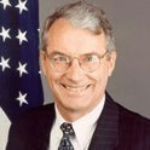
Thomas Fingar
#39,503
Most Influential Person Now
American Deputy Director Of National Intelligence
Why Is Thomas Fingar Influential?
(Suggest an Edit or Addition)According to Wikipedia, Charles Thomas Fingar, is a professor at Stanford University. In 1986 Fingar left Stanford to join the State Department. In 2005, he moved to the Office of the Director of National Intelligence as the deputy director of National Intelligence for Analysis and concurrently served as the chairman of the National Intelligence Council until December 2008. In January 2009, he rejoined Stanford as a Payne Distinguished Lecturer in the Freeman Spogli Institute for International Studies.
Thomas Fingar's Published Works
Number of citations in a given year to any of this author's works
Total number of citations to an author for the works they published in a given year. This highlights publication of the most important work(s) by the author
Published Works
- Reducing Uncertainty: Intelligence Analysis and National Security (2011) (72)
- Ties that Bind: Strategic Stability in the U.S.–China Relationship (2013) (23)
- China's Quest for Independence: Policy Evolution in the 1970s (1980) (19)
- The new great game : China and South and Central Asia in the era of reform (2016) (17)
- Colorectal cancer in Chinese and Chinese-Americans. (1985) (13)
- Climate and Social Stress: Implications for Security Analysis (2012) (12)
- Intelligence and Grand Strategy (2012) (5)
- WORRYING ABOUT WASHINGTON (2011) (5)
- Survey Summary: Students and Scholars from the People's Republic of China in the United States, August 1981. (1981) (4)
- Fateful Decisions: Choices That Will Shape China's Future (2020) (4)
- Science & Technology in China (1984) (4)
- China’s Challenges: Now It Gets Much Harder (2020) (4)
- Higher Education and Research in the People's Republic of China: Institutional Profiles. (1981) (3)
- China's Rise: Contingency, Constraints and Concerns (2012) (3)
- Forty years of formal—but not yet normal—relations (2019) (1)
- 2. China’s Goals in South Asia (2020) (1)
- Managing Science Policy and Technology Acquisition: Strategies for China and a Changing World (1984) (1)
- Remarks and Q&A by the Deputy Director of National Intelligence for Analysis & Chairman, National Intelligence Council Dr. Thomas Fingar, 2008 INSA Analytic Transformation Conference, Orlando, Florida, September 4, 2008 (2008) (1)
- Uneasy Partnerships (2020) (1)
- 2007 Iran nuclear NIE: more of the story (2021) (0)
- China’s Rise, Japan’s Quest and South Korea-US Co-operation (2014) (0)
- EAST ASIA (2007) (0)
- Energy and development (1980) (0)
- 9. Sources and Shapers of China’s Foreign Policy (2020) (0)
- Global Trends and Security in the Muslim World: Dilemmas for U.S. and Regional Policy (2009) (0)
- Eight. Geography and Destiny (2020) (0)
- 2. The Logic and Efficacy of Engagement: Objectives, Assumptions, and Impacts (2021) (0)
- Forty years of formal—but not yet normal—relations (2019) (0)
- Politics, policy, and China's future course (1986) (0)
- Analyzing the Structure and Performance of Kim Jong-un's Regime (2017) (0)
- Introduction: The Quest for Independence (2019) (0)
- New Missions, New Challenges: 2005–2008 (2019) (0)
- Frustrations and Hopes: An American perspective on United States‐China relations (2001) (0)
- One Step Back? Reassessing an Ideal Security State for Northeast Asia 2025 (2011) (0)
- From Mandate to Blueprint (2021) (0)
- Technology and Communist Culture: The Socio-Cultural Impact of Technology Under Socialism . Edited by Frederic A. Fleron Jr New York: Praeger (Praeger Special Studies in International Politics and Government), 1977. xii, 518 pp. Notes, Tables, Figures, Index. $27.50. (1979) (0)
- Recent Policy Trends in Industrial Science and Technology (2019) (0)
- 13. China’s Engagement with South and Central Asia: Patterns, Trends, and Themes (2020) (0)
- Ten. China’s Engagement with Northeast Asia (2020) (0)
- Domestic Policy and the Quest for Independence (2019) (0)
- 1. China and South and Central Asia in the Era of Reform and Opening (2020) (0)
- One. Uneasy Partnerships (2020) (0)
- Introduction (2020) (0)
- Energy in China: Paradoxes, Policies, and Prospects (2019) (0)
- Six. China and Korea (2020) (0)
- Two. Sources and Shapers of China’s Global Engagement (2020) (0)
- "New Missions, New Challenges, 2005-2008" (chapter in the book Truth to Power) (2019) (0)
This paper list is powered by the following services:

Other Resources About Thomas Fingar
What Schools Are Affiliated With Thomas Fingar?
Thomas Fingar is affiliated with the following schools:
