William B. Kouwenhoven
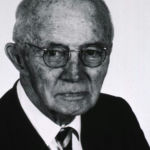
American electrical engineer
William B. Kouwenhoven's AcademicInfluence.com Rankings

Download Badge
Engineering
Why Is William B. Kouwenhoven Influential?
(Suggest an Edit or Addition)According to Wikipedia, William Bennet Kouwenhoven , also known as the "Father of Cardiopulmonary Resuscitation," is famous for his contributions to the development of the closed-chest cardiac massage and his invention of the cardiac defibrillator. After obtaining his doctorate degree in engineering from the Karlsruhe Technische Hochschule in Germany, Kouwenhoven began his career as the dean at the Johns Hopkins University in Baltimore. Kouwenhoven focused his research mainly on improving and saving lives of patients through the application of electricity. With the help and cooperation of the Johns Hopkins School of Medicine's Department of Surgery and an Edison Electric Institute grant, Kouwenhoven was able to develop a closed-chest defibrillator. For his contributions to the field of medical science, he became the first ever recipient of an honorary degree conferred by the Johns Hopkins School of Medicine. Two years before his death, Kouwenhoven was also awarded the Albert Lasker Award for Clinical Medical Research.
William B. Kouwenhoven's Published Works
Published Works
- Closed-chest cardiac massage. (1960) (1985)
- Cardiac arrest. Report of application of external cardiac massage on 118 patients. (1961) (273)
- THE EFFECT OF ALTERNATING ELECTRICAL CURRENTS ON THE HEART (1933) (165)
- Closed chest defibrillation of the heart. (1957) (116)
- The development of the defibrillator. (1969) (66)
- THE CURRENT FLOWING THROUGH THE HEART UNDER CONDITIONS OF ELECTRIC SHOCK (1932) (54)
- A-C shocks of varying parameters affecting the heart (1959) (47)
- EXTERNAL CARDIAC RESUSCITATION. (1964) (47)
- Treatment of ventricular fibrillation using a capacitor discharge. (1954) (46)
- Effects of electricity on the human body. (1949) (44)
- Medical Evaluation of Man Working in AC Electric Fields (1967) (43)
- Exposure of Mice to a Strong AC Electric Field - An Experimental Study (1967) (43)
- Electroshock for atrial flutter and atrial fibrillation. Follow-up studies on 50 patients. (1965) (33)
- Medical Follow-Up Study of High Voltage Linemen Working in AC Electric Fields (1973) (30)
- Body Currents in Live Line Working (1966) (27)
- Cardiopulmonary arrest. (1965) (26)
- Landmark article July 9, 1960: Closed-chest cardiac massage. By W. B. Kouwenhoven, James R. Jude, and G. Guy Knickerbocker. (1984) (25)
- A new approach to cardiac resuscitation. (1961) (24)
- A simple electrical apparatus for the clinical treatment of ventricular fibrillation. (1951) (22)
- Cardiopulmonary resuscitation. An account of forty-five years of research. (1973) (19)
- Effect of Electric Shock (19)
- OF 153 ATTEMPTED--CARDIOPULMONARY RESUSCITATIONS BY TRAINED AMBULANCE PERSONNEL--NO FATAL INJURIES WERE PRODUCED. (1964) (18)
- An Experimental Study of Abnormalities produced in the Organism by Electricity. (18)
- A high sensitivity power factor bridge (1932) (17)
- A New Approach to Cardiac Resuscitation (1961) (15)
- Resuscitation by countershock (1933) (15)
- Electrical Accidents (1944) (14)
- A THROUGH TYPE CURRENT TRANSFORMER AND AMPLIFIER FOR MEASURING ALTERNATING CURRENTS OF A FEW MILLIAMPERES (1931) (11)
- The Measurement of Specific Resistance by Eddy Current Shielding (1934) (11)
- An experimental and clinical study of a portable external cardiac defibrillator. (1962) (11)
- Field Treatment of Electric Shock Cases-I (1957) (10)
- Electric Shock Effects of Frequency (1936) (10)
- EXTERNAL CARDIAC MASSAGE (1961) (10)
- The Development of a Portable Defibrillator (1962) (10)
- Heart activation in cardiac arrest. (1961) (10)
- Effects of electricity on the human body (1949) (10)
- Clinical and experimental application of a new treatment for cardiac arrest. (1960) (9)
- Electric defibrillation (1955) (9)
- Cardiac Responses to Transthoracic Capacitor Discharges in the Dog (1958) (8)
- Closed chest resuscitation of cardiac arrest. (1961) (8)
- Effects of Electric Shock-II (1931) (7)
- Arcs between moving electrodes (1949) (7)
- Residual air and moisture in impregnated paper insulation-II (1928) (7)
- A Portable Defibrillator (1963) (6)
- Absolute power factor of air capacitors (1938) (6)
- The gray area. (1966) (6)
- INJURIES PRODUCED BY CONTACT WITH ELECTRIC CIRCUITS (1932) (6)
- Fundamental properties of impregnated paper (1931) (5)
- Effect on Breathing of an Electric Shock Applied to the Extremities (1973) (5)
- Heart injury from electric shock (1932) (5)
- What are effects of electric shock? (1931) (4)
- Electric Defibrillation [includes discussion] (1955) (3)
- CLOSED CHEST DEFIBRILLATION (1958) (3)
- Analysis and Redesign of a Carbon Pile Voltage Regulator for Aircraft Generators (1948) (3)
- Electrical accidents (1937) (3)
- The quadrant electrometer (3)
- Absolute power factor of air capacitors (1938) (2)
- Effect of Capacitor Discharges on the Heart [includes discussion] (1956) (2)
- Status ofClosed Chest Cardiac Massage (1965) (2)
- The Effects of High-Voltage, Low-Capacitance Electrical Discharges in the Dog! (1958) (2)
- VOLUME OF AIR MOVED BY ARTIFICIAL RESPIRATION IN ANESTHETIZED MEN (1942) (2)
- Phase Defect Angle of an Air Capacitor (1930) (2)
- Electric shock effects of frequency (1936) (2)
- Cardiac resuscitation without thoracotomy. (1960) (2)
- A Comparison of the Relative Efficiency of the Schafer and Pole-Top Methods of Artificial Respiration (1941) (2)
- A Standard of Low Power Factor (1933) (2)
- A low cost treadmill for experimental animals. (1954) (2)
- Contact resistance — The contribution of nonuniform current flow (1951) (1)
- The Importance of the Points of Contact in Electric Injuries. (1931) (1)
- A High Sensitivity Power Factor Bridge (1932) (1)
- Abridgment of residual air and moisture in impregnated paper insulation — II (1928) (1)
- The spreading and interface resistances of electric contacts (1953) (1)
- The electric arc in argon and helium (1953) (1)
- Further research in injuries from electric shock (1932) (1)
- Study of Artificial Respiration on Anesthetized Men (1944) (1)
- The Quadrant Electrometer (0)
- Field treatment in electric shock cases - II (1960) (0)
- Contact Resistance-The Contribution of Nonuniform Current Flow (1951) (0)
- Abridgment of phase defect angle of an air capacitor (1930) (0)
- CLOSED-CHEST CARDIAC MASSAGE-Reply (1960) (0)
- Oscillographic Study of the Current and Voltage in a Permeameter Circuit (0)
- Oscillographic study of the current and voltage in a permeameter circuit (1923) (0)
- A comparison of the relative efficiency of the schafer and pole-top methods of artificial respiration (1941) (0)
- The American College of Physicians Award Lecture: The Development of the Defibrillator. (1969) (0)
- Electrical techniques and the heart in health and disease (1961) (0)
- Carbon pile voltage regulators for aircraft (1949) (0)
- Obligations of the engineer (1950) (0)
- Response of the medalist (1962) (0)
- VIII-zero method of measuring power with the quadrant electrometer (0)
- Absolute power factor of air capacitors (1938) (0)
- The electric arc in argon and helium (1953) (0)
- Study of artificial respiration on anesthetized men (1944) (0)
- Field treatment in electric shock cases — II (1960) (0)
- A method of determining the correctness of polyphase wattmeter connections (0)
- A standard of low power factor (1933) (0)
- Abridgment of effects of electric shock (0)
- Study of artificial respiration on anesthetized men (1944) (0)
- Field treatment in electric shock cases (1957) (0)
- Ambient temperature measurements (1922) (0)
- Zero method of measuring power with the quadrant electrometer (0)
- A new method of calculating circuits (1933) (0)
- Nerve injuries from electric shock (1931) (0)
- Fundamental Properties of Impregnated Paper (1931) (0)
- A Method of Determining the Correctness of Polyphase Wattmeter Connections (0)
This paper list is powered by the following services:

Other Resources About William B. Kouwenhoven
What Schools Are Affiliated With William B. Kouwenhoven?
William B. Kouwenhoven is affiliated with the following schools:
