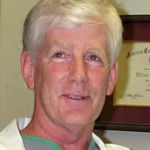
William DeVries
American surgeon
William DeVries's AcademicInfluence.com Rankings

Download Badge
Philosophy
William DeVries's Degrees
- Doctorate Medicine University of Utah
Why Is William DeVries Influential?
(Suggest an Edit or Addition)According to Wikipedia, William Castle DeVries is an American cardiothoracic surgeon, mainly known for the first transplant of a TAH using the Jarvik-7 model. Early years and Medical School William DeVries was born December 19, 1943, in Brooklyn Navy Yard. His father, Henry DeVries, was a Dutch immigrant who died in combat on the destroyer in 1944 during the Battle of Hollandia, where he had enrolled as a naval surgeon. When his father died William was only six months old. He was raised by his grandmother and his mother who was a member of the Church of Jesus Christ of Latter-day Saints until he was five. After his mother remarried, the family was enlarged by eight more children and they all moved to Ogden, Utah, where he attended Ben Lomond High School and where he was an athlete being on the basketball and track teams. During his childhood DeVries became an Eagle Scout. Because the family was meeting financial difficulties, William had to work throughout his high school years to help out. He also won the Utah state finals in high jumping and thanks to his sport abilities he went to the University of Utah on a track scholarship. During college he was part of the Sigma Chi fraternity. He graduated in 1966 with a bachelor's degree in molecular and Genetic biology. Later on he went to medical school also at the University of Utah and received his M.D. degree in 1970.
William DeVries's Published Works
Published Works
- Functional Recovery in Traumatic Spinal Cord Injury after Transplantation of Multineurotrophin-Expressing Glial-Restricted Precursor Cells (2005) (294)
- Transplantation of Ciliary Neurotrophic Factor-Expressing Adult Oligodendrocyte Precursor Cells Promotes Remyelination and Functional Recovery after SpinalCord Injury (2010) (193)
- Functional and electrophysiological changes after graded traumatic spinal cord injury in adult rat (2005) (163)
- What goes up, can come down: Novel brain stimulation paradigms may attenuate craving and craving-related neural circuitry in substance dependent individuals (2015) (121)
- Gait analysis in normal and spinal contused mice using the TreadScan system. (2009) (92)
- Short trains of transcutaneous auricular vagus nerve stimulation (taVNS) have parameter-specific effects on heart rate (2018) (92)
- Anatomical and functional outcomes following a precise, graded, dorsal laceration spinal cord injury in C57BL/6 mice. (2009) (82)
- Transdiagnostic Effects of Ventromedial Prefrontal Cortex Transcranial Magnetic Stimulation on Cue Reactivity. (2018) (56)
- Spinal cord contusion based on precise vertebral stabilization and tissue displacement measured by combined assessment to discriminate small functional differences. (2008) (54)
- The Efficacy of Daily Prefrontal Repetitive Transcranial Magnetic Stimulation (rTMS) for Burning Mouth Syndrome (BMS): A Randomized Controlled Single-blind Study (2016) (52)
- Probing the Frontostriatal Loops Involved in Executive and Limbic Processing via Interleaved TMS and Functional MRI at Two Prefrontal Locations: A Pilot Study (2013) (49)
- Laboratory Administration of Transcutaneous Auricular Vagus Nerve Stimulation (taVNS): Technique, Targeting, and Considerations. (2019) (42)
- Transcranial electrical stimulation motor threshold can estimate individualized tDCS dosage from reverse-calculation electric-field modeling (2020) (41)
- Dorsally‐derived oligodendrocytes in the spinal cord contribute to axonal myelination during development and remyelination following focal demyelination (2011) (37)
- CD47 knockout mice exhibit improved recovery from spinal cord injury (2011) (35)
- Use of imperceptible wrist vibration to modulate sensorimotor cortical activity (2019) (28)
- NMDA receptor partial agonist, d-cycloserine, enhances 10 Hz rTMS-induced motor plasticity, suggesting long-term potentiation (LTP) as underlying mechanism (2020) (23)
- Developing Repetitive Transcranial Magnetic Stimulation (rTMS) as a Treatment Tool for Cocaine Use Disorder: a Series of Six Translational Studies (2017) (23)
- A comprehensive study of sensorimotor cortex excitability in chronic cocaine users: Integrating TMS and functional MRI data. (2015) (21)
- A Double-Blind, Sham-Controlled Pilot Trial of Pre-Supplementary Motor Area (Pre-SMA) 1 Hz rTMS to Treat Essential Tremor (2016) (21)
- Transcutaneous Auricular Vagus Nerve Stimulation-Paired Rehabilitation for Oromotor Feeding Problems in Newborns: An Open-Label Pilot Study (2020) (20)
- Expanded Safety and Efficacy Data for a New Method of Performing Electroconvulsive Therapy (2016) (20)
- Sildenafil improves epicenter vascular perfusion but not hindlimb functional recovery after contusive spinal cord injury in mice. (2012) (19)
- Transcutaneous auricular vagus nerve stimulation (taVNS) for improving oromotor function in newborns (2018) (17)
- State-Dependent Effects of Ventromedial Prefrontal Cortex Continuous Thetaburst Stimulation on Cocaine Cue Reactivity in Chronic Cocaine Users (2019) (14)
- The effect of task difficulty on motor performance and frontal-striatal connectivity in cocaine users. (2017) (12)
- NMDA-receptor agonist reveals LTP-like properties of 10-Hz rTMS in the human motor cortex (2021) (11)
- Are EMG and visual observation comparable in determining resting motor threshold? A reexamination after twenty years (2019) (11)
- Personalized TMS helmets for quick and reliable TMS administration outside of a laboratory setting (2020) (10)
- Cerebellar rTMS for motor control in progressive supranuclear palsy (2019) (9)
- The physiological and neurobiological effects of transcutaneous auricular vagus nerve stimulation (taVNS) (2017) (8)
- Elevated Brain Iron in Cocaine Use Disorder as Indexed by Magnetic Field Correlation Imaging. (2019) (5)
- Paired inhibitory stimulation and gait training modulates supplemental motor area connectivity in freezing of gait. (2021) (5)
- Brain stimulation in zero gravity: transcranial magnetic stimulation (TMS) motor threshold decreases during zero gravity induced by parabolic flight (2020) (4)
- Transcranial Electrical Stimulation Motor Threshold Combined with Reverse-Calculated Electric Field Modeling Can Determine Individualized tDCS Dosage (2019) (4)
- P211 Development, safety, and parameter optimization of a novel form of noninvasive vagus nerve stimulation: Transcutaneous auricular vagus nerve stimulation (taVNS) (2017) (2)
- Brain stimulation in zero gravity: transcranial magnetic stimulation (TMS) motor threshold decreases during zero gravity induced by parabolic flight (2020) (2)
- Development of Closed-loop Transcutaneous Auricular Vagus Nerve Stimulation (taVNS) as a Neurorehabilitation Tool (2019) (2)
- Effect of Theta-Burst Stimulation Dose on Motor Cortex Excitability: a parametric evaluation of 600, 1200, 1800 pulses per session (2019) (1)
- The Effects of Focal Electrically Administered Seizure Therapy Compared With Ultrabrief Pulse Right Unilateral Electroconvulsive Therapy on Suicidal Ideation (2021) (1)
- Is NMDA receptor activation sufficient to enhance 10 Hz rTMS motor plasticity? A double-blind, crossover pilot study. (2020) (1)
- Neurophysiologic Effects of Transcutaneous Auricular Vagus Nerve Stimulation (taVNS) via Electrical Stimulation of the Tragus: A Concurrent taVNS/fMRI Study and Review. (2022) (1)
- Methods for paired-pulse cerebellar-M1 TMS with neuronavigation (2019) (0)
- TU-108. Evidence for 10 Hz rTMS-mediated LTP (2022) (0)
- Across time and space: Independent component analysis reveals spatial and temporal differences in functional brain networks between cocaine and alcohol users (2017) (0)
- A novel pilot study of tavns paired with oral feeding in neonates with brain injury (2019) (0)
- Effects of D-Cycloserine on the Primary Motor Cortex Excitability in Healthy Human Subjects: A Paired-Pulse-Tms Protocol (2021) (0)
- Comparing Cognitive Side Effects & Antidepressant Efficacy of Focal Electrically Administered Seizure Therapy (FEAST) Versus Standard Ultra-Brief Right Unilateral (UBP-RUL) ECT: A Two-Site Clinical Trial (2020) (0)
- Beyond pharmacotherapy: Emerging data that non-invasive brain stimulation may be an efficacious strategy for decreasing drug craving in substance-dependent individuals (2015) (0)
- Using rTMS to modulate neural networks involved in Freezing of Gait in Parkinson's Disease (2019) (0)
- P373. Evidences for 10 Hz rTMS-Mediated LTP (2022) (0)
- One Step Closer To Patient-Specific Brain Treatments: Interleaved Transcranial Magnetic Stimulation (TMS)/fMRI to Assess the fMRI BOLD Response Before and After High Frequency Repetitive TMS Treatment (2015) (0)
- Evidences for LTP Induction by 10 Hz rTMS in Human Motor Cortex (2021) (0)
- Abstract TMP43: Differential Cortical Effect Modulated by Anodal, Cathodal and Bihemispheric Transcranial Direct Current Stimulation (tDCS) in Patients With Ischemic Stroke (2020) (0)
- Use of imperceptible wrist vibration to modulate sensorimotor cortical activity (2019) (0)
- Single session of high amperage transcranial direct current stimulation shows differential montage effect on cortical excitability in ischemic stroke patients (2021) (0)
- Hypoactive bold response to general emotional stimuli among cocaine-dependent women (2014) (0)
- Examining frontal-striatal circuit integrity in male and female cocaine users with Tms (2017) (0)
- Abstract TMP39: Further Evidence of Safety and Tolerablity on 4 mA Transcranial Direct Current Stimulation (tDCS) in Patients With Ischemic Stroke (2020) (0)
- Does 10-Hz rTMS work through long-term potentiation? (2021) (0)
This paper list is powered by the following services:

Other Resources About William DeVries
What Schools Are Affiliated With William DeVries?
William DeVries is affiliated with the following schools:
